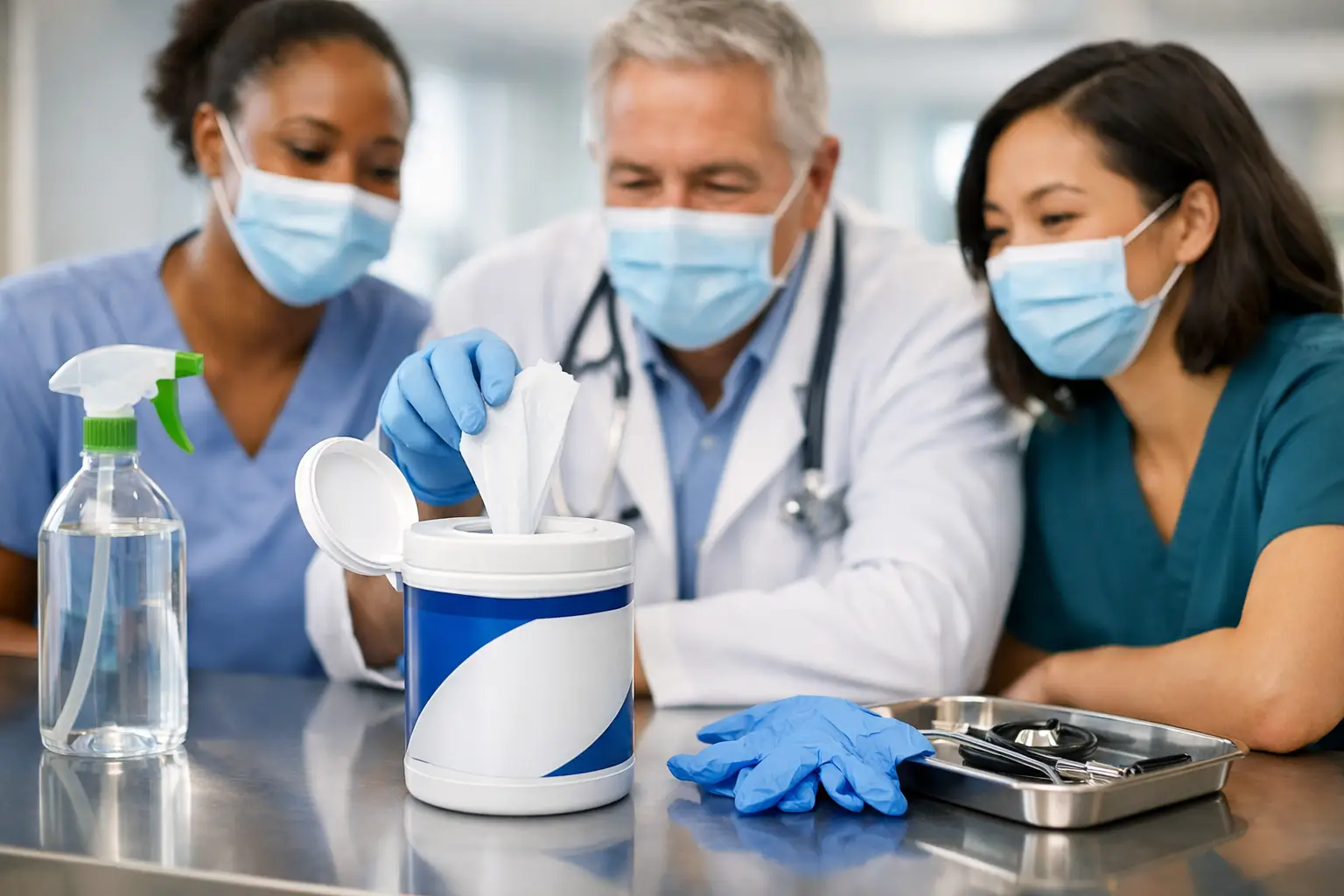
A wipe fails long before the canister is empty if it slows room turnover, leaves residue on touchpoints, or creates documentation problems during an audit. That is the practical frame for any hospital disinfectant wipes review. In healthcare and other high-compliance facilities, buyers are not choosing a convenient cleaning accessory. They are selecting a disinfection format that has to support infection control protocols, staff workflow, material compatibility, and regulatory confidence at the same time.
Thank you for reading this post, don't forget to subscribe!What a hospital disinfectant wipes review should actually measure
Too many product comparisons stop at kill claims and scent. Those details matter, but they do not tell a facility manager, EVS leader, or procurement team whether a wipe will perform well on a real shift. A useful review starts with the operational question: what happens when this wipe is used hundreds of times a day across patient rooms, nurse stations, carts, breakrooms, elevators, and shared equipment?
That means looking at contact time, wipe saturation, surface coverage, residue, and how consistently the product can be used by staff under time pressure. A disinfectant can be registered correctly and still be a poor fit for a fast-moving care environment if the required dwell time is unrealistic or if the substrate dries out before the surface stays visibly wet long enough.
The strongest products tend to balance efficacy with usability. If a wipe tears during use, leaves lint, or forces repeated passes to wet a broad surface, labor costs rise and compliance often drops. When use becomes inconvenient, staff members improvise. That is where risk enters the process.
Core evaluation criteria in a hospital disinfectant wipes review
EPA registration and organism claims
Start with the label. A hospital-grade disinfectant wipe should have clear EPA registration and claims appropriate to the setting where it will be used. Buyers in healthcare, government, and institutional environments should also confirm whether the product supports required pathogen claims for their protocols, not just general bacteria and viruses.
This is where context matters. A clinic with mostly hard, noncritical surfaces may prioritize broad routine disinfection. A hospital unit with more vulnerable populations may need a tighter review of organism claims, use instructions, and turnover requirements. The wipe is only as defensible as its label and documentation.
Contact time in real workflows
Shorter contact time is not automatically better, but unrealistic contact time is a problem. If a product requires a long wet dwell period on a surface that staff usually clean quickly between occupants, the protocol can break down in practice. Buyers should ask whether the wipe keeps surfaces visibly wet long enough without excessive reapplication.
For shared medical equipment and high-touch surfaces, this point is especially important. A wipe that supports a workable contact time often performs better operationally than one with impressive claims that are hard to execute consistently.
Material compatibility
Hospitals and institutional facilities contain sensitive surfaces – touchscreen equipment, coated metals, plastics, bed rails, carts, and specialty fixtures. A wipe that disinfects aggressively but shortens the life of equipment can create avoidable replacement and maintenance issues.
A disciplined review should include technical guidance on compatible materials, surface testing where needed, and any warnings about repeated use. Low-residue formulations usually support easier adoption across multiple touchpoints, but buyers still need to verify the fit for their own asset mix.
Residue, odor, and user acceptance
Residue is often treated like a minor complaint until it starts affecting patient-facing areas or electronics. Sticky or cloudy films can create both appearance issues and operational headaches. Odor matters too, especially in healthcare settings where strong chemical smell can affect patient comfort and staff acceptance.
The better-performing wipes are usually the ones staff will keep using correctly through an entire shift. That does not mean selecting based on comfort alone. It means recognizing that user acceptance is part of disinfection reliability.
Packaging integrity and wipe delivery
Canister design is rarely the first thing buyers discuss, but it affects waste and consistency every day. If wipes bunch, tear at the perforation, or dry out because the seal does not hold, the product becomes less reliable over time.
For larger facilities, packaging should support both storage discipline and point-of-use practicality. The product has to remain usable from first pull to last pull, especially in decentralized environments where canisters may be placed across multiple stations.
Where buyers often get the decision wrong
The most common mistake is treating all disinfectant wipes as interchangeable if they carry a hospital-grade claim. They are not. Chemistry, substrate quality, moisture retention, and use instructions vary widely, and those differences show up quickly in labor efficiency and compliance outcomes.
Another mistake is evaluating wipes in isolation from the facility’s broader cleaning program. The right choice depends on who is using the product, what surfaces are being disinfected, and how the wipe fits daily cleaning, incident response, and inspection readiness. A wipe may test well on paper yet underperform if it clashes with training realities or creates confusion between cleaning and disinfecting steps.
Buyers also sometimes overcorrect toward harshness. Strong chemistry may appear to signal stronger protection, but in many environments it creates trade-offs in user safety, odor burden, or material wear. Safer chemistry with institutional performance is often the better long-term choice when supported by the right documentation and efficacy profile.
Comparing wipe chemistries without oversimplifying
There is no universal best chemistry. Quaternary ammonium, hydrogen peroxide-based options, alcohol-containing wipes, and other disinfectant systems each have advantages and constraints. The right fit depends on facility protocols, target surfaces, and the types of soils and pathogens involved.
Quat-based wipes are common and often effective for routine hard-surface disinfection, but some leave more visible residue on certain materials. Hydrogen peroxide-based products can support a cleaner finish and broader user acceptance in some environments, though compatibility and label instructions still need review. Alcohol-containing formulations may dry quickly, which can be useful in some applications and problematic in others if maintaining wet contact time is difficult.
That is why a serious hospital disinfectant wipes review should avoid one-size-fits-all claims. Procurement teams should compare the chemistry against actual use conditions, not just marketing language.
What matters most by facility type
In acute care and outpatient healthcare, documentation, contact time, and compatibility with common medical surfaces usually lead the decision. In government and military facilities with healthcare components, procurement readiness and supporting technical paperwork may carry equal weight. In manufacturing or transportation environments with first-aid clinics and shared touchpoints, buyers may need hospital-grade disinfection standards while also accounting for heavier soil loads and more varied surfaces.
Smaller businesses and direct buyers often need the same performance, just with less complexity in deployment. They still benefit from institutional-grade standards, especially when they want products that align with safer handling expectations and professional cleaning outcomes.
How to test wipes before standardizing
A controlled trial tells more than a specification sheet alone. Run the product in the exact areas where it will be used most heavily. Watch whether staff can keep the surface wet for the required time. Check for residue on stainless steel, plastics, and screens where applicable. Review whether the wipe tears, dries, or requires multiple pulls for one task.
At the same time, verify the paperwork. SDS sheets, technical specifications, EPA registration details, and any relevant certifications should be easy to access and current. In regulated settings, the product itself is only part of the purchase decision. The documentation trail matters just as much.
This is one area where a structured supplier relationship makes a difference. Buyers should expect clarity on product use, compliance support, and fit for institutional environments, not just a case shipped to the dock.
Final judgment: what makes a wipe worth approving
The best hospital disinfectant wipes are not simply the strongest or the fastest on a label. They are the ones that staff can use correctly, surfaces can tolerate over time, and procurement teams can defend during reviews and audits. Performance has to hold up under routine use, not just controlled claims.
For organizations evaluating hospital-grade wipes, the smart decision is usually the one that balances disinfection efficacy, safer chemistry, workflow fit, and documentation readiness. Veteran Commercial Cleaning operates in that discipline-first space, where buyers need products that support both sanitation outcomes and procurement confidence. Choose the wipe that your team can execute with consistency, because consistency is what keeps facilities protected when the pace picks up.