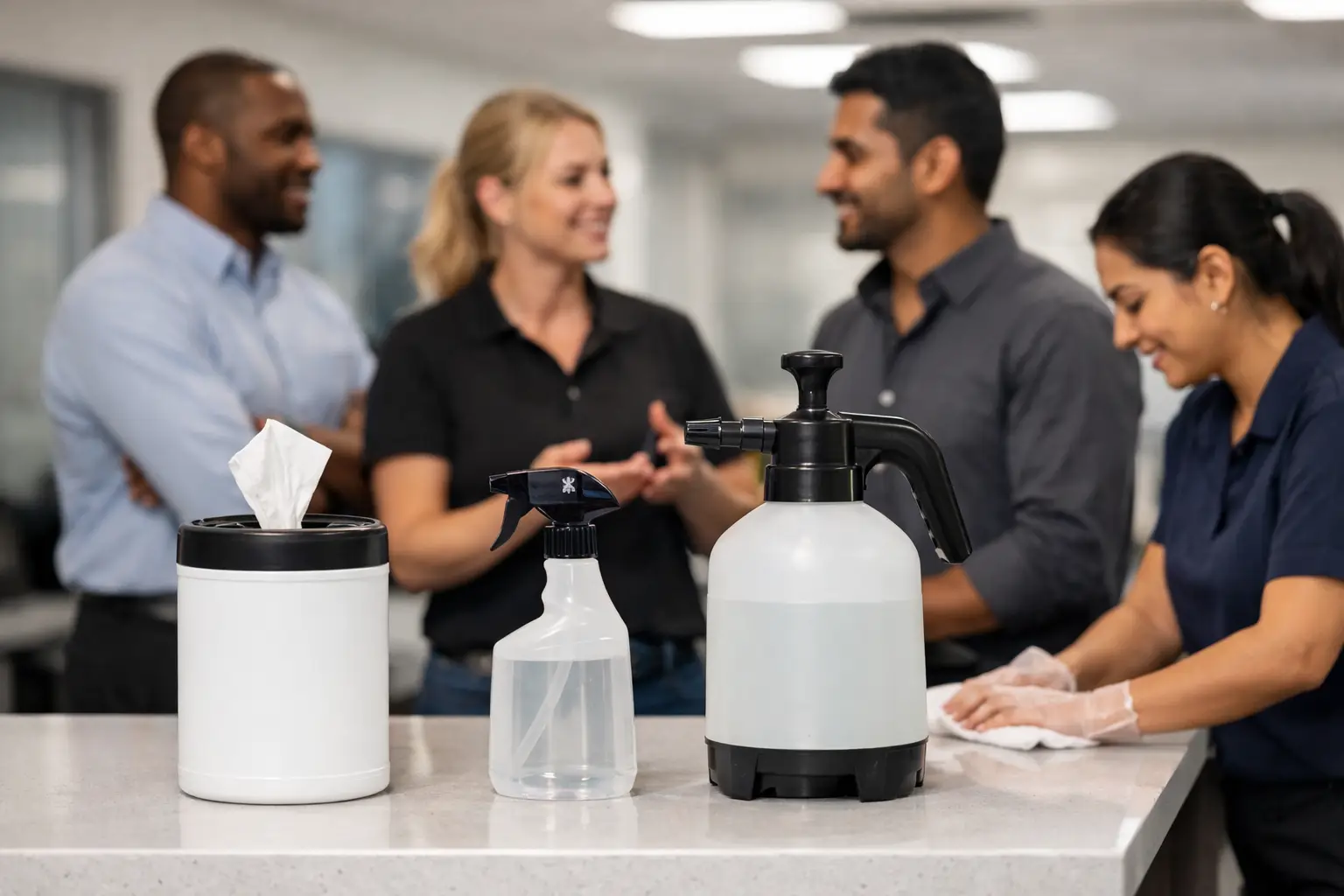
A missed surface in a clinic, hangar, or production area is rarely just a cleaning issue. It can become a documentation gap, a safety risk, or an operational failure. That is why the choice between bulk wipes vs spray systems matters more than many buyers expect. The right format affects contact time, chemical handling, cross-contamination control, labor consistency, and how easily your team can execute the standard every shift.
Thank you for reading this post, don't forget to subscribe!For procurement officers and facility leaders, this is not a question of convenience alone. It is a decision about how cleaning chemistry is delivered in real conditions, by real staff, under compliance pressure. In many facilities, both systems have a place. The challenge is understanding where each one supports performance and where it introduces avoidable risk.
Bulk wipes vs spray systems: what actually changes on the floor
On paper, both methods can apply disinfectants, sanitizers, or general-purpose cleaners. In practice, they behave very differently once they reach a patient room, checkpoint, break area, manufacturing line, or public restroom.
Bulk wipes provide a controlled delivery method. The chemistry is already loaded into the wipe or into a refillable wipe system designed for a specific solution. That reduces variation in how much product reaches the surface. It also reduces the chances that a worker uses the wrong dilution, overapplies a chemical, or creates excess airborne mist in occupied areas.
Spray systems offer flexibility. They can cover irregular surfaces, larger square footage, and equipment that is not easy to reach with a folded wipe. In some environments, they support broad cleaning tasks efficiently, especially when paired with the correct cloth or mop system. But sprays depend more heavily on technique. Coverage can be inconsistent, overspray can affect nearby materials, and chemical exposure management becomes more important.
That difference is where many operational outcomes begin.
Compliance and documentation often favor controlled application
High-compliance facilities do not just need surfaces cleaned. They need cleaning processes that are defensible. That includes proper product selection, staff training, SDS access, and confidence that the product was used as intended.
Bulk wipes often support that standard well because they simplify the process. The worker pulls one wipe, treats the surface, and follows the label direction for coverage and contact time. There are fewer variables than with a spray bottle and separate cloth. In healthcare and government settings, that consistency can help reduce training drift across shifts and departments.
Spray systems can still meet compliance expectations, but they require tighter controls. Teams need to know the correct spray distance, how much product is enough to keep the surface visibly wet for the full contact time, and which cloth is approved for use with the chemistry. They also need safeguards to prevent unlabeled secondary containers or off-protocol refills. If your operation already runs disciplined chemical management programs, that may be manageable. If not, the margin for error is wider.
For facilities that face audits, inspections, or internal quality reviews, a more controlled application method can reduce preventable findings.
Contact time is where good intentions fail
Many disinfection failures happen after the right chemical has been selected. The product is approved, the label is available, and staff believe they completed the task. But the surface did not stay wet long enough.
Bulk wipes can improve consistency here because the wipe carries a predictable amount of chemistry. On small and medium touchpoints, that often helps teams apply enough product without flooding the area. A well-designed wipe also keeps the chemistry in contact with the surface instead of sending part of it into the air.
Spray systems can meet contact time requirements, but only if the user applies enough volume and does not wipe the surface dry too quickly. In fast-moving environments, that is a real weakness. Staff may spray lightly, spread the product thin, and move on before the required dwell time has passed. If your risk profile is high, that gap matters.
Safety is not just about the chemical itself
Facilities often focus on choosing safer chemistry, and they should. But delivery method also affects safety. Bulk wipes vs spray systems is partly a question of how much chemical is released into the environment, how likely accidental exposure becomes, and how easy it is to maintain control around staff, visitors, and sensitive equipment.
Bulk wipes usually reduce aerosolization and overspray. That can be valuable in patient-facing spaces, confined work areas, transportation environments, and anywhere staff are cleaning near electronics, controls, or polished surfaces. Wipes also lower the chance that chemical mist settles on adjacent items that were not intended for treatment.
Spray systems create more exposure variables. Fine mist can drift. Floors can become slick if overapplied. Nearby workers may inhale more vapors, especially in spaces with limited ventilation. None of this makes spray systems inappropriate. It means they require stronger process discipline and closer alignment between the chemical, the environment, and the application method.
If your facility has a strong focus on worker safety and indoor environmental quality, controlled application may offer a cleaner operational path.
Workflow efficiency depends on the task, not the assumption
It is easy to assume wipes are always faster for spot cleaning and sprays are always faster for larger jobs. That is often true, but not always.
Bulk wipes perform well in high-touch disinfection rounds, quick response cleaning, and mobile workflows. Environmental services teams, maintenance crews, and frontline staff can carry them easily and use them without setup. That simplicity can improve compliance in busy settings where the cleaning step needs to happen now, not after a trip back to the janitor closet.
Spray systems become more practical when the surface area expands or the soil load is heavier. A spray paired with the correct wiping material can handle broad horizontal surfaces, partition walls, and equipment exteriors efficiently. In manufacturing and industrial settings, where residue, dust, or grease may require a more active cleaning pass, sprays often fit better than pre-moistened wipes alone.
The mistake is choosing one format for every task. The better approach is matching format to the cleaning objective. If the task is precision disinfection of shared touchpoints, wipes may lead. If the task is general surface cleaning across a larger zone, spray systems may earn their place.
Waste control and material compatibility deserve more attention
Sustainability goals and waste reduction targets are now part of many procurement decisions. So is protecting expensive equipment and finishes.
Bulk wipes create a visible waste stream because each wipe is discarded after use. That can raise concern, especially in large facilities with frequent turnover. At the same time, wipes may reduce overall chemical waste because they deliver measured product and limit overapplication. They also lower the risk of saturating surfaces that should only receive controlled moisture.
Spray systems can reduce disposable material use if paired with reusable cloth programs and strong laundering controls. But they can also increase chemical waste through overspray, evaporation, and repeated application. On sensitive surfaces, over-wetting can create its own problems, including finish damage, streaking, or residue if the chemistry is not managed correctly.
For facilities balancing environmental responsibility with sanitation performance, the best choice often depends on the whole system, not the container type alone.
Where each system tends to work best
Bulk wipes are often the stronger fit for healthcare touchpoints, public-facing counters, vehicle interiors, control panels, shared devices, restrooms, and rapid-response cleaning where consistency matters more than broad coverage. They are also useful where staff turnover is higher and standardized execution is a priority.
Spray systems are often better suited for larger non-critical surfaces, industrial housekeeping, pre-cleaning before disinfection, and environments where the soil load demands more mechanical action. They can also support custom protocols when facilities need one chemistry for several surface categories and have the training discipline to manage it properly.
In many operations, the answer is not wipes or sprays. It is wipes for critical touchpoints and sprays for surrounding surfaces. That kind of layered protocol is common in facilities that take both infection prevention and operational efficiency seriously.
How to make the right decision internally
If you are evaluating bulk wipes vs spray systems, start with the surfaces that create the highest risk if cleaned inconsistently. Then review your staffing reality, not your ideal training model. A process that depends on perfect technique may look efficient in policy but fail under daily workload.
Next, look at documentation and standardization. Can your team show what product is used, how it is applied, and whether the method supports the label directions? Can new employees follow the process correctly on day one? Can supervisors verify it without guesswork?
Finally, consider the environment itself. Occupied healthcare space, aviation interiors, government buildings, manufacturing floors, and high-traffic commercial sites all place different demands on chemical delivery. The strongest programs are built around that reality. Veteran Commercial Cleaning works with buyers who need that kind of operational fit, especially where compliance, safety, and institutional performance must work together.
The most reliable cleaning systems are rarely the most complicated. They are the ones your team can execute correctly, every time, under pressure.