A cleaning product can look qualified on a spec sheet and still create a problem at the loading dock, during an audit, or on the facility floor. An unavailable SDS, inconsistent dilution guidance, late shipment, or weak documentation can turn a routine purchase into an operational risk. The cleaning procurement trends for 2026 reflect that reality: buyers are evaluating suppliers not only on product capability, but on their readiness to support compliance, continuity, safety, and measurable outcomes.
Thank you for reading this post, don't forget to subscribe!For healthcare systems, manufacturing plants, airports, government facilities, and military installations, cleaning procurement is becoming more disciplined. The question is no longer simply, “Does this cleaner work?” Procurement teams need to know whether the supplier can document what it sells, support the required use case, maintain availability, and help the facility withstand scrutiny.
Cleaning Procurement Trends 2026 Buyers Should Watch
Documentation is becoming a purchasing requirement
Technical documentation has long mattered in regulated environments, but it is moving closer to the center of the buying decision. Procurement officers increasingly need product data before a purchase order is issued, not after materials arrive. Safety Data Sheets, technical specifications, ingredient information where appropriate, dilution instructions, use limitations, and relevant regulatory certifications all support faster internal approvals.
This shift is especially significant when several departments influence a purchase. Environmental services may focus on cleaning results, safety teams may review chemical handling, operations may need compatibility information, and procurement must verify supplier eligibility. When documents are incomplete or difficult to obtain, the purchasing cycle slows down.
A prepared supplier should be able to provide clear, current documentation in a format that can be retained in a facility’s records. Buyers should also confirm that documentation applies to the exact product and formulation being ordered. A generic statement of compliance is not a substitute for product-specific records.
Safer chemistry is being judged by performance, not slogans
Facilities are under pressure to reduce unnecessary chemical harshness without reducing sanitation standards. That is driving stronger interest in environmentally responsible cleaning chemistry, but buyers are approaching the category with more discipline than they did in the past.
A sustainability claim alone is not enough for a high-compliance facility. Decision-makers want to know whether a cleaner can handle the soils present in their environment, fit existing procedures, protect employees from avoidable exposure, and meet applicable sanitation requirements. In manufacturing, for example, a degreaser must address the actual oils and residues on the line. In healthcare and government environments, disinfectants and sanitation systems must support defined protocols and documentation needs.
The trade-off is practical. The strongest chemical option is not always the best operational option if it creates material compatibility concerns, excessive ventilation requirements, difficult storage rules, or higher handling risk. Conversely, a gentler formulation that cannot meet the cleaning task can create repeat work and inconsistent outcomes. The better procurement approach is to evaluate efficacy, safety, compatibility, and use conditions together.
Supplier continuity is now part of risk management
Supply disruption has changed the way facility teams view routine consumables. A dependable supply of industrial wipes, disinfectants, degreasers, and sanitation materials is not a convenience when cleaning supports production schedules, patient safety, public access, or mission readiness.
In 2026, procurement teams are placing more value on suppliers that communicate clearly about fulfillment capability, order requirements, and available alternatives within an approved cleaning program. This does not mean every facility needs to add more suppliers. In some cases, consolidating qualified purchasing through a capable supplier can reduce administrative work and improve consistency.
The right strategy depends on the facility’s risk profile. A small commercial operation may prioritize straightforward ordering and dependable product access. A government contractor or large institutional buyer may require more formal supplier records, contract readiness, and consistent documentation across multiple locations. In either case, continuity planning should include more than inventory levels. It should address supplier responsiveness, product equivalency review, documentation control, and internal approval paths for substitutions.
Procurement teams are measuring total operational impact
The lowest unit cost is losing ground as the sole benchmark for cleaning purchases. Buyers are looking more closely at the total operational effect of a product and supplier relationship. That includes labor time, dilution accuracy, storage requirements, worker safety, rework, waste, surface compatibility, and the administrative burden of managing documentation.
Concentrated products can reduce storage and shipping volume, for example, but only when staff have the training and equipment to dilute them correctly. Ready-to-use solutions may simplify deployment in decentralized facilities, but they may require more storage capacity. Neither format is universally better. The right choice is the one that supports the facility’s workflow while controlling risk.
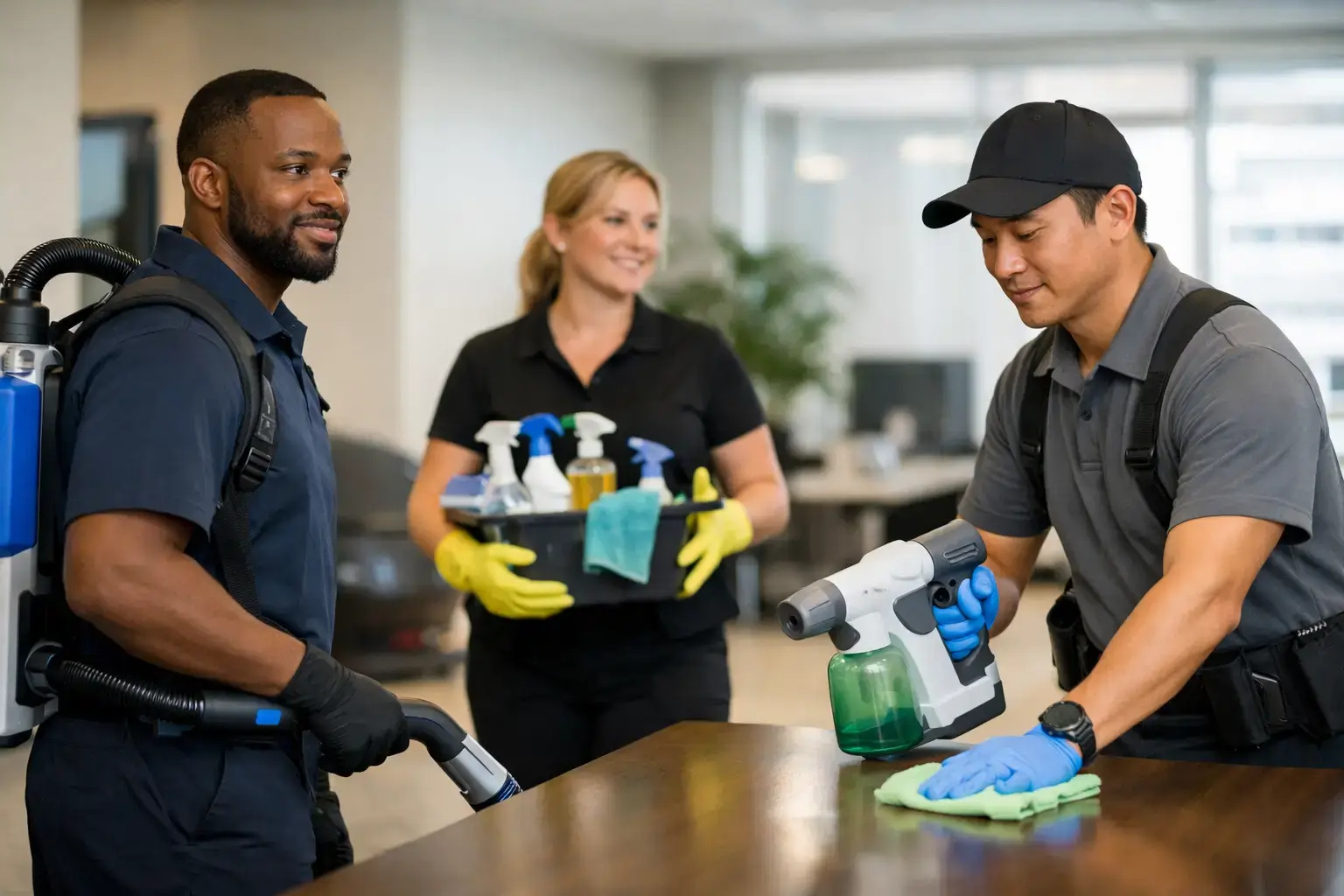
This broader evaluation is also affecting cleaning service decisions. Facilities are asking whether service providers can work within site-specific procedures, document completed work, support sanitation goals, and respond appropriately to changing conditions. For critical environments, performance must be repeatable, not dependent on a single shift or individual.
Contract readiness is separating qualified suppliers from general vendors
Government agencies, public institutions, and contractors with federal requirements need suppliers that understand procurement structure. Vendor status, contract access, product documentation, ordering processes, and responsiveness to bid or quote requests can all affect whether a supplier is practical to work with.
For eligible buyers, GSA contract access and Small Business participation can support procurement objectives, but credentials should be paired with operational capability. Buyers should verify that the supplier can provide the required cleaning products, maintain supporting records, and communicate in the language of procurement rather than relying on broad marketing claims.
Veteran Commercial Cleaning supports this need with a veteran-led, procurement-focused approach that combines institutional cleaning performance with environmentally responsible chemistry. For purchasers, the value is not only the product itself. It is the ability to work with a supplier that recognizes the documentation, compliance, and service expectations common in high-accountability environments.
Standardization is replacing one-off product decisions
Facilities are increasingly moving away from buying individual cleaning products in isolation. Instead, they are building more intentional cleaning programs that align products, procedures, training, and replenishment. Standardization can reduce confusion for frontline teams, simplify storage, and make it easier to maintain current SDS files and approved-product lists.
This does not require using one product for every task. Over-standardization can create performance gaps when distinct soils or surfaces require specialized solutions. The goal is a controlled product portfolio: enough options to handle real conditions, but not so many that teams struggle with inconsistent instructions, duplicate inventory, and unmanaged chemical risk.
A useful review begins with the facility’s highest-risk cleaning tasks. Identify the surfaces, soil types, sanitation needs, frequency, and staff handling requirements involved. Then determine which products should be standard, which require site-specific approval, and what documentation must remain available for each item.
How Procurement Leaders Can Prepare
The most effective response to 2026 procurement changes is to make cleaning supplies part of a broader operational controls review. Start by auditing the products currently in use and checking whether corresponding SDS sheets, technical data, and usage instructions are current and accessible. Then identify categories where inconsistent sourcing, unclear substitutions, or repeated stock issues create unnecessary risk.
Next, establish practical supplier standards. These may include documentation turnaround expectations, product traceability, communication requirements, fulfillment reliability, and support for institutional ordering processes. A supplier does not need to be the largest option in the market to meet those standards, but it must be prepared to meet them consistently.
Finally, involve the people who use the products. Procurement can establish controls, but frontline environmental services teams, maintenance staff, and safety personnel reveal whether a cleaning program works under real conditions. Their feedback can expose issues with dispensing, odor, residue, surface performance, packaging, or training before those issues become larger operational problems.
The best cleaning purchase in 2026 will be easier to defend than to explain. When a supplier, product, and process are aligned, facilities can focus less on chasing paperwork and shortages and more on maintaining safe, clean, ready-for-use environments.