A manufacturing degreasing success example is rarely about finding a stronger chemical and applying more of it. In a production environment, the real result comes from matching chemistry, dwell time, application method, rinse requirements, and verification to the soil and the equipment. When those controls are aligned, facilities can reduce slip hazards, improve part quality, support inspections, and protect production schedules without defaulting to unnecessarily harsh formulations.
Thank you for reading this post, don't forget to subscribe!The Operating Problem Behind Degreasing Failures
Manufacturing soils are not interchangeable. Hydraulic oil, stamping lubricants, carbonized residue, coolant buildup, adhesive transfer, and accumulated airborne grime respond differently to cleaning chemistry. A maintenance team may describe all of them as grease, but a one-size-fits-all approach often leaves residue behind or creates a new problem such as surface discoloration, corrosion risk, excessive rinse water, or unsafe worker exposure.
The operational consequences can reach beyond appearance. Oil on walking surfaces increases the chance of slips. Residue on workholding fixtures can affect consistency. Buildup around motors, guards, and conveyors makes routine inspection more difficult. Where components require painting, coating, bonding, or assembly, inadequate cleaning may introduce downstream quality failures that are far more expensive than correcting the original condition.
For facilities managers and procurement teams, the decision is therefore not simply which degreaser to buy. It is whether the cleaning process can be documented, repeated by different shifts, and adjusted when production conditions change.
Manufacturing Degreasing Success Example: A Controlled Approach
Consider a representative metal fabrication operation with a recurring problem around its press and fabrication area. Operators tracked cutting fluid, lubricants, and fine metal particulate from the work zone into aisleways and onto equipment exteriors. The facility had a regular cleaning routine, but the results varied. Some areas looked clean after service yet remained slick underfoot. In other locations, residue reappeared quickly because the cleaning team was spreading soil rather than removing it.
The facility did not begin by escalating to the most aggressive available chemistry. Instead, its operations and environmental health and safety teams evaluated the soil, the affected surfaces, and the practical limits of cleaning during active production. They identified three distinct tasks: daily removal of tracked oil from floors, scheduled cleaning of machine exteriors and guards, and targeted removal of heavier buildup during planned maintenance windows.
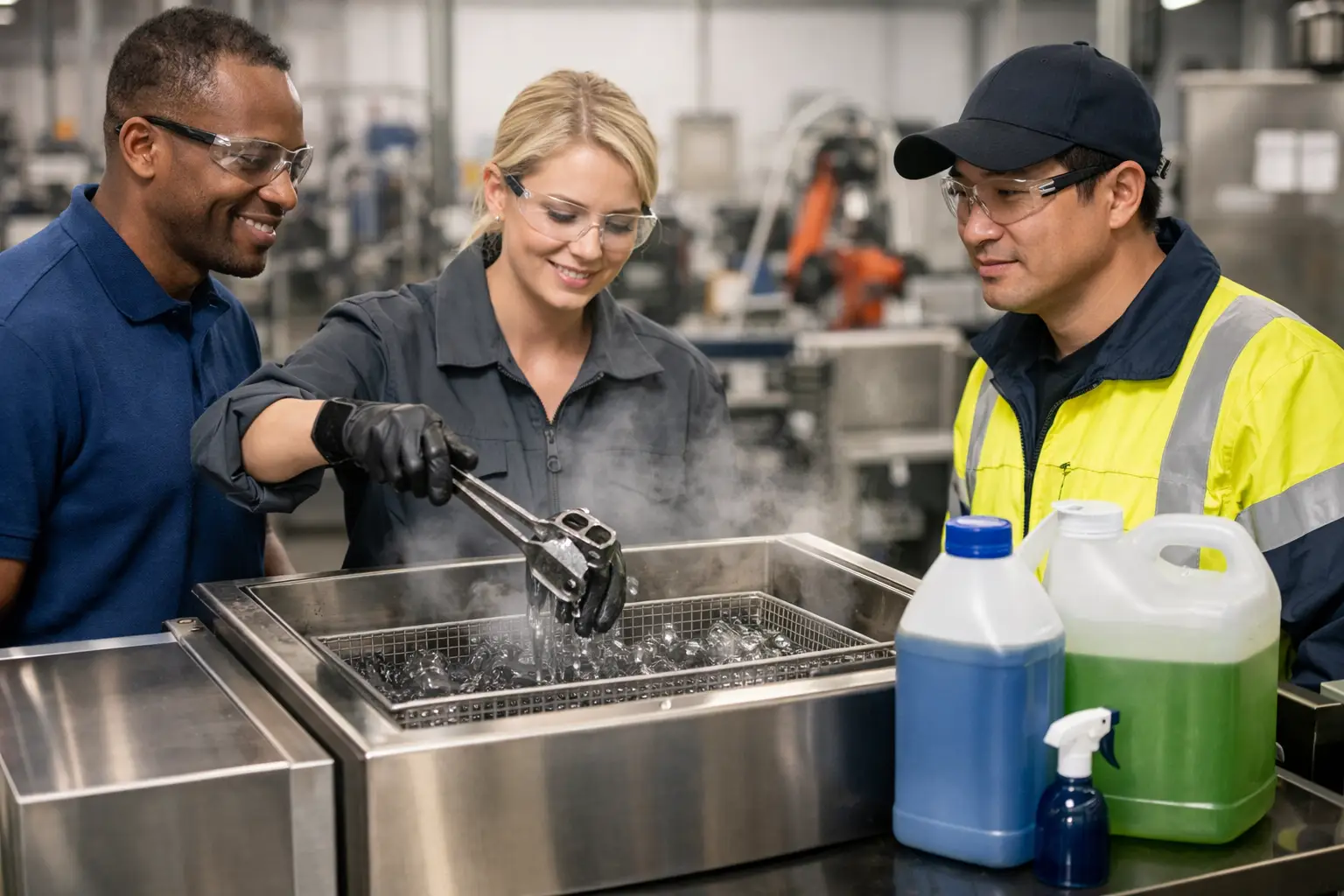
That distinction changed the process. A concentrated industrial degreasing chemistry was selected based on surface compatibility and soil load, then diluted and applied according to the intended task. The team established defined dwell times so the chemistry could break down oil before agitation. They also changed the tools used in the area, separating floor-cleaning equipment from tools used near machines to limit cross-contamination.
Most importantly, the team added a verification step. Supervisors checked high-risk travel paths after cleaning, inspected known accumulation points around equipment, and documented exceptions that required maintenance attention rather than additional cleaning. A leaking fitting, for example, is not a cleaning failure. Treating it as one only conceals the source of the problem.
Within several cleaning cycles, the facility saw more consistent floor conditions, clearer equipment surfaces for inspection, and fewer complaints about residue in common production areas. The success was not tied to a dramatic one-time deep clean. It came from a controlled system that connected cleaning performance to daily operations.
Why Process Control Matters More Than Chemical Strength
A degreaser can perform well in a test area and still fail in normal operations if the process is poorly defined. Applying solution to dry, heavily soiled surfaces and immediately wiping it away may not allow enough contact time. Using too little solution can redistribute oil. Using too much can create runoff, waste material, and complicate rinsing. The correct approach depends on the material being removed, the surface being cleaned, local safety procedures, and whether residue-free results are required.
Water quality and temperature can also affect performance. In some facilities, cooler conditions slow the breakdown of heavy oils. In others, hard water affects dilution and can leave deposits if rinse practices are inconsistent. A cleaning program should account for these site conditions rather than assuming that label directions alone solve every operating variable.
Environmentally responsible chemistry has a meaningful role here, but it should be evaluated by performance and compatibility, not by broad claims. A safer formulation that does not adequately remove the soil can lead workers to overapply it or repeat the task. Conversely, an unnecessarily harsh formulation may increase handling requirements and surface risk without improving the actual result. The objective is effective cleaning with a process that supports worker safety and facility standards.
Build the Trial Around Real Production Conditions
Before standardizing a degreasing program, conduct a controlled site trial in the actual environment. Choose representative surfaces and soils, including the areas that historically cause the most complaints or rework. Test during the same shift conditions that workers normally face, not only during a low-traffic demonstration.
The evaluation should document the surface type, soil type, dilution, application method, dwell time, agitation method, rinse or wipe procedure, and final inspection criteria. This information gives maintenance, safety, and procurement teams a common record for comparing options. It also prevents a common purchasing mistake: approving a solution based on a single visual result without understanding the labor and controls needed to repeat it.
A useful trial also includes worker input. The employees performing the task can identify whether spray access is restricted, whether the solution dries too quickly, whether rinsing creates hazards, or whether the process conflicts with production timing. Their feedback does not replace technical specifications or safety documentation, but it identifies practical gaps before the program reaches the full facility.
Documentation Is Part of Cleaning Performance
High-compliance facilities need more than a verbal assurance that a degreaser works. They need current Safety Data Sheets, technical specifications, use instructions, and clear storage and handling guidance. Depending on the application, they may also need records that support internal environmental, safety, quality, or customer requirements.
Documentation supports consistency across shifts and locations. If a supervisor changes, a contractor rotates, or a new operator joins the team, the process should not depend on institutional memory. Written procedures establish the approved dilution, personal protective equipment requirements, application controls, and escalation path for spills or persistent buildup.
For government, military, aviation, and other procurement-driven environments, supplier readiness matters as well. Veteran Commercial Cleaning supports institutional buyers with professional-grade cleaning chemistry and the documentation needed to evaluate it responsibly. The right supply partner should make it easier to confirm technical fit, support internal review, and maintain an orderly purchasing record.
Measure the Results That Matter
A successful degreasing program should be measured by more than how bright a floor or machine looks after service. Facilities should track whether identified slip-prone areas remain controlled, whether equipment inspections are easier to complete, whether cleaning labor is being repeated unnecessarily, and whether residue-related quality concerns decline.
The best metrics vary by operation. A food-adjacent manufacturing area may prioritize sanitation controls and rinse verification. A metal fabrication shop may focus on oil tracking, fixture cleanliness, and maintenance accessibility. A plant with sensitive coatings or electronics may place greater emphasis on material compatibility and low-residue cleaning. There is no universal benchmark, but there should be a defined standard for the specific risk being managed.
When an area repeatedly fails inspection, investigate the pattern. The cause may be inadequate dwell time, an incorrect dilution, worn cleaning tools, insufficient recovery of liquid soil, or an equipment leak. Correcting the root cause is more reliable than asking workers to clean harder.
Turn One Success Into a Facility Standard
Once a trial proves effective, standardization should be deliberate. Define the zones, frequencies, approved chemistry, tools, training requirements, and inspection points. Keep the process simple enough for normal operations, but specific enough that it produces consistent results under real production pressure.
The strongest manufacturing degreasing success example is one that continues to work after the initial attention has moved elsewhere. When chemical selection, worker safety, documentation, and verification are treated as one operating discipline, cleaning becomes a practical control for uptime, compliance, and workplace readiness.