An exam room can look clean and still fall short of the standard required for patient safety. The best products for exam rooms are not simply the strongest chemicals on the shelf. They are the products that fit the room’s surfaces, target the required pathogens, support staff workflow, and provide documentation a facility can stand behind during an audit.
Thank you for reading this post, don't forget to subscribe!For healthcare facilities, outpatient clinics, occupational health centers, and government medical operations, product selection affects far more than appearance. It influences infection prevention, employee exposure, equipment longevity, supply consistency, and the ability to demonstrate that room turnover procedures are being followed. A disciplined program starts by separating cleaning from disinfection, then choosing professional-grade products for each task.
What Exam Rooms Need From Cleaning Products
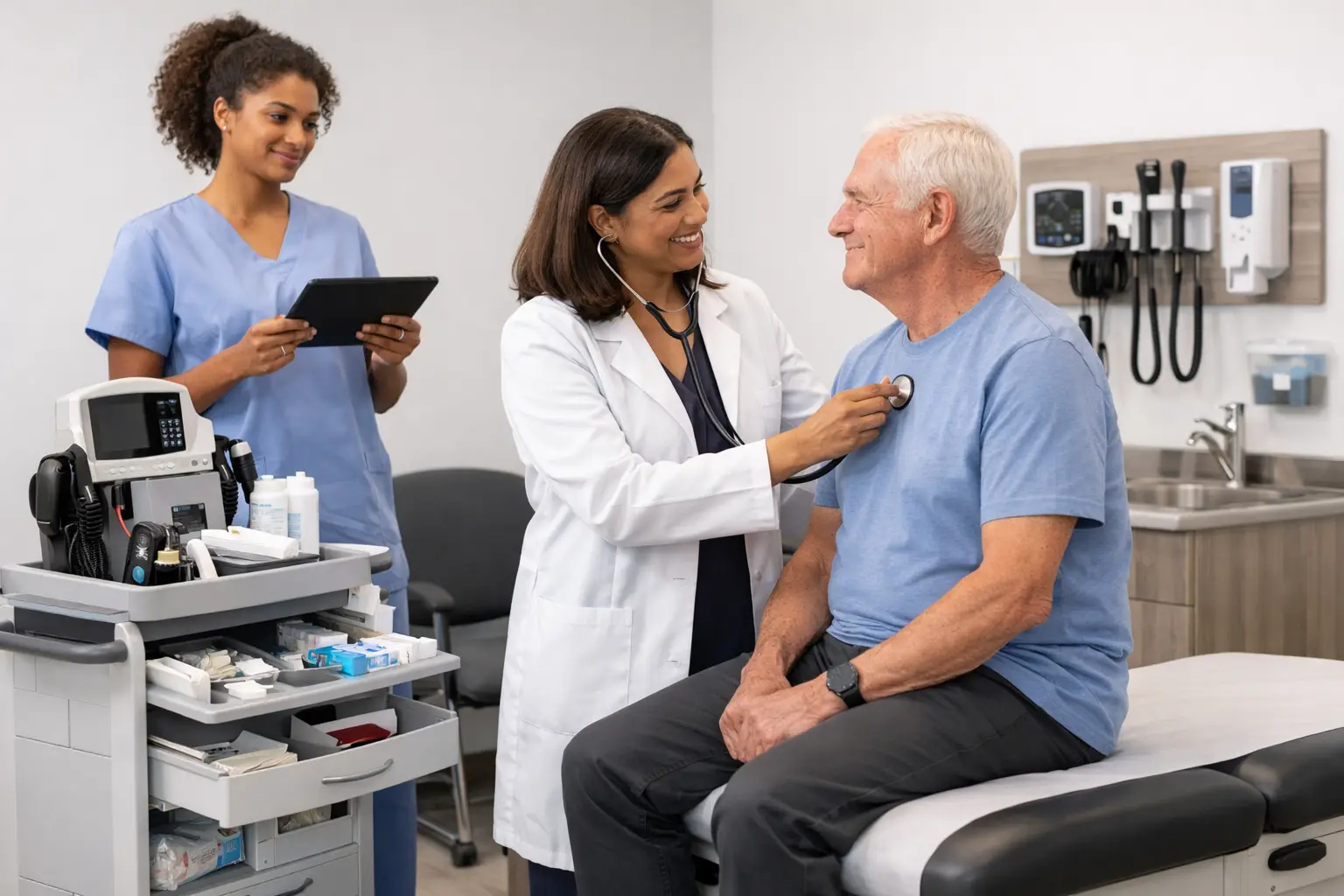
Exam rooms are high-touch, high-turnover spaces. Patients, clinicians, technicians, and visitors interact with the same limited set of surfaces throughout the day: exam tables, chair arms, counter areas, door handles, light switches, keyboards, carts, sink fixtures, and diagnostic equipment exteriors.
That operating reality calls for products that are effective without adding unnecessary complexity. A product may have strong antimicrobial claims, but it can still be the wrong operational choice if the required contact time is too long for room turnover, if it damages sensitive surfaces, or if staff need extra PPE and extensive training to use it safely.
Facilities should evaluate each product against four practical requirements: the label claims match the pathogens and use case that matter to the facility; the stated contact time fits the turnover procedure; the chemistry is compatible with the surfaces being treated; and the supplier can provide current safety and technical documentation. SDS sheets, technical data, use instructions, and regulatory information should be readily available to purchasing and environmental services teams.
Best Products for Exam Rooms by Task
A dependable exam-room program usually relies on a small, deliberate group of products rather than one all-purpose solution. That approach gives staff clearer instructions and helps facility leaders avoid using disinfectants where a cleaner is needed first, or using a general cleaner where an EPA-registered disinfectant is required.
EPA-Registered Surface Disinfectants
A hospital-grade surface disinfectant is the central product in an exam-room turnover process. It should be selected according to its EPA registration, label directions, approved use surfaces, contact time, and organism claims. The label is the controlling document. Staff should never assume a product is effective against a particular pathogen based on a broad marketing description alone.
Disinfectants work best on visibly clean surfaces. If soil, residue, or biological material is present, it can interfere with the disinfectant’s ability to contact the surface effectively. For routine turnover, staff should follow the product label for pre-cleaning requirements, dilution if applicable, application method, and wet contact time.
Contact time deserves special attention. The surface must remain visibly wet for the full labeled period to achieve the stated disinfection claim. In a busy clinic, a product with a manageable contact time may support stronger compliance than a product with a longer dwell requirement that staff cannot realistically meet between appointments.
Professional Disinfecting Wipes
Pre-moistened disinfecting wipes are often the most practical option for high-touch exam-room surfaces. They allow staff to apply disinfectant directly, reduce the risk of mixing errors, and simplify spot treatment between patients. They are especially useful for chair arms, drawer pulls, light switches, work surfaces, exam-table controls, and other frequently touched areas.
Wipes do have limits. One wipe may not carry enough solution to keep a large surface wet for the full contact time. Staff should use enough wipes to fully wet the area and avoid returning a used wipe to the container. Wipes should also be stored with the lid properly closed so they do not dry out before use.
For facilities with varied clinical equipment, compatibility matters as much as convenience. Certain electronics, coated surfaces, vinyl upholstery, and medical-device exteriors may have manufacturer-specific cleaning instructions. Environmental services teams should verify both the equipment manufacturer’s guidance and the disinfectant label before standardizing a wipe across every surface.
Neutral Cleaners for Soil Removal
Disinfection does not replace cleaning. A neutral, low-residue cleaner gives staff a practical way to remove dirt, dust, spills, and routine buildup from surfaces before disinfection when needed. It is also appropriate for surfaces that do not require a disinfectant treatment at every interval, such as floors, wall areas, and nonclinical fixtures.
For exam rooms, neutral cleaners can help preserve finishes and reduce residue that makes counters or floors look dull. The trade-off is that they do not provide the same antimicrobial claims as an EPA-registered disinfectant. Use them as part of a defined sequence, not as a substitute when disinfection is required by facility protocol.
Floor Cleaners for Clinical Traffic Areas
Exam-room floors collect tracked-in soil, dust, and moisture from constant foot traffic. A professional floor cleaner should be compatible with the facility’s flooring material and cleaning equipment while helping maintain a safe, low-residue surface. Product choice may vary between vinyl composition tile, sealed concrete, ceramic tile, rubber flooring, and specialty healthcare flooring.
A floor product should support safety as well as appearance. Overly aggressive chemistry can degrade finishes, while excess residue may create slip concerns or make future cleaning harder. In patient care areas, facilities should use a defined schedule for routine floor cleaning and increase attention after spills or visibly soiled conditions.
Sanitation Systems for Consistent Coverage
Larger facilities may benefit from sanitation systems that standardize how products are diluted, dispensed, and applied. These systems can reduce waste, support more consistent chemistry concentration, and make it easier to establish repeatable procedures across multiple exam rooms or departments.
The right system depends on the facility’s size, staffing model, and turnover volume. A small outpatient office may need simple, ready-to-use disinfecting wipes and clearly labeled bottles. A hospital department, airport medical unit, or government clinic may need a more controlled program with standardized dispensing, documented training, and replenishment processes.
Build the Product Program Around Room Turnover
The product is only one part of the outcome. An exam room needs a sequence that employees can perform reliably under pressure. The most effective programs define what gets cleaned between every patient, what is cleaned daily, and what requires periodic deep cleaning.
Between patients, the emphasis is usually on high-touch and patient-contact surfaces. This may include exam tables, seating, counters, handles, switches, sink fixtures, and approved diagnostic-device surfaces. At the end of the day, staff can address broader surfaces, floors, storage areas, and less frequently touched fixtures according to the facility’s protocol.
Clear product placement supports adherence. Disinfecting wipes and approved surface products should be accessible where turnover occurs, not locked in a distant supply room. At the same time, products should be secured, labeled, and stored according to their SDS and manufacturer instructions. Poor storage can create avoidable safety and compliance issues.
Documentation Is Part of Product Selection
Healthcare procurement teams should not have to chase down basic information after a purchase. Before adding any cleaning or disinfecting product to an exam-room protocol, verify that the supplier can provide the current SDS, technical specifications, usage instructions, and applicable regulatory information.
Documentation supports more than purchasing approval. It gives supervisors the materials needed for staff training, hazard communication, inspection preparation, and incident response. It also allows facilities to verify that a product’s claims, contact time, and intended applications align with the written procedures already in place.
Veteran Commercial Cleaning supports institutional buyers with professional-grade cleaning and sanitation products built for performance-focused environments where safety documentation and dependable supply matter. For facilities operating under formal procurement requirements, that level of support can be as valuable as the chemistry itself.
Avoid the Most Common Product Gaps
The most common mistake is relying on a single product for every room, surface, and cleaning condition. A disinfectant may be appropriate for patient-contact surfaces but inefficient for routine floor cleaning. A general cleaner may leave surfaces looking good while failing to meet a required disinfection standard.
Another gap is treating labeled contact time as optional. If surfaces dry too quickly, staff may need to apply more product or change the application method. Training should explain what a visibly wet surface looks like and why wiping a product off immediately can defeat its intended use.
Finally, avoid selecting products based only on convenience. Ready-to-use formats can improve compliance, but they should still be evaluated for approved claims, compatibility, storage requirements, and waste considerations. Concentrates can reduce packaging and support bulk operations, but only when dilution controls and staff procedures are dependable.
A strong exam-room supply plan gives staff the right product at the right moment, with clear instructions and documentation that holds up under scrutiny. That is how cleaning becomes a reliable part of patient care rather than a task completed on appearance alone.