A floor can look clean at the end of a shift and still create problems for the operation. Residual oil can compromise traction. Improper chemistry can damage coatings. Missing documentation can delay approval by environmental health and safety teams. A useful industrial floor cleaner review must therefore go beyond scent, foam, or how quickly a product cuts visible dirt. It should measure whether the cleaner supports safe, repeatable results under the actual conditions of the facility.
Thank you for reading this post, don't forget to subscribe!For manufacturing plants, transportation hubs, healthcare support areas, government buildings, and military installations, floor care is an operational control. The right cleaner helps protect people, surfaces, equipment, and audit readiness. The wrong one may create unnecessary exposure, leave a slippery film, interfere with downstream sanitation, or require excessive labor to correct.
Start With the Soil Load, Not the Label
No industrial floor cleaner is the right answer for every facility. A light-duty neutral cleaner that performs well on sealed vinyl or finished concrete may not have the soil-lifting capacity needed near machine lines, loading docks, vehicle bays, or maintenance areas. Conversely, an aggressive degreaser may be unnecessary for routine cleaning and may be unsuitable for certain floor finishes or sensitive work areas.
A disciplined evaluation begins with the material being removed. Typical soils include tracked-in dirt, hydraulic fluid, machining oils, grease, carbon residue, food soils, salt, rubber marks, disinfectant residue, and dust from production processes. Identify whether the soil is water-based, petroleum-based, protein-based, or a mixed load. That distinction affects the chemistry, dwell time, agitation, and rinse requirements needed for consistent performance.
Facilities should also consider how frequently the floor is soiled. A warehouse aisle cleaned daily presents a different challenge than a fabrication area where oil accumulates throughout every shift. If the cleaner only works when labor teams scrub repeatedly or use excessive concentration, it may not be a dependable part of the cleaning program.
Industrial Floor Cleaner Review Criteria That Matter
A review should focus on operational evidence rather than broad marketing language. Product performance matters, but so do worker safety, material compatibility, and the ability to document what is being used on site.
Cleaning performance in real conditions
The most meaningful test is a controlled field trial on a representative section of flooring. Apply the product according to label directions and use the same equipment, water conditions, and labor process planned for regular service. Observe how well it releases soil, whether it requires repeated passes, and whether residue remains after recovery or rinsing.
Pay close attention to corners, traffic lanes, expansion joints, textured surfaces, and areas around equipment. These locations expose whether a product truly suspends soil or simply moves it across the surface. A cleaner that performs on an open, lightly soiled test patch may fail where the facility actually needs it most.
Surface compatibility and finish protection
Concrete is not one category. Floors may be sealed, polished, coated, painted, epoxy finished, urethane finished, or left largely unprotected. Each surface responds differently to pH, solvents, abrasives, and repeated wet cleaning. An effective cleaner must remove soil without dulling a finish, softening coatings, causing discoloration, or contributing to premature wear.
Ask for technical specifications and confirm the product’s intended uses before wide deployment. If the facility uses floor markings, safety striping, anti-slip coatings, or specialized static-control surfaces, include those materials in the review. Compatibility questions are especially important when changing from a long-standing chemical program to a new formulation.
Worker safety and indoor environment
A cleaner can be strong without being unnecessarily harsh. Facilities should evaluate dilution requirements, required personal protective equipment, fragrance level, ventilation needs, and the potential for skin, eye, or respiratory irritation. Safety Data Sheets should be readily available, current, and understandable to the teams responsible for use and storage.
Lower-harshness chemistry can support a safer workplace when it is matched correctly to the cleaning task. It does not mean accepting weaker performance. It means choosing a formulation that can meet the soil challenge while reducing avoidable chemical burden for employees and occupants.
Slip resistance deserves separate attention. Some products leave a film when overdosed, poorly recovered, or used on the wrong surface. Others may alter the condition of a finish over time. Test the full process, including dilution, dwell time, mechanical action, recovery, and any rinse step. The review should reflect the conditions workers will face after the floor returns to service.
Equipment compatibility and labor efficiency
Floor cleaners must work with the tools already in the building. Verify compatibility with autoscrubbers, mop systems, pressure washing equipment, dilution-control stations, recovery tanks, and wastewater procedures. Excessive foam can disrupt equipment performance. A product that leaves difficult residue in tanks or lines creates maintenance work that may not be visible during a short product demonstration.
Labor efficiency is more than the speed of one pass with a scrubber. Consider chemical mixing, refill frequency, dwell time, rework, rinsing, and the time required to prepare the area for traffic. The better product is often the one that provides repeatable results with fewer corrective passes and clearer procedures, even if it is not the most aggressive option in every circumstance.
Documentation Is Part of Product Performance
For high-compliance facilities, a product review is incomplete without procurement and safety documentation. Operations leaders may need SDS sheets, technical data, ingredient or regulatory information when applicable, dilution instructions, storage guidance, and evidence supporting any performance or sustainability claim.
Documentation helps environmental services, safety personnel, procurement teams, and contractors use the same product correctly. It also reduces risk when an inspector, client, or internal auditor asks why a particular chemical was selected. A supplier that can provide organized, current records is better positioned to support institutional purchasing than one that offers only a general product description.
Avoid assuming that terms such as “green,” “non-toxic,” or “industrial strength” answer compliance questions. Those phrases can be useful starting points, but they are not substitutes for reviewing the actual product documentation and determining whether the cleaner fits site-specific requirements. The standard should be evidence, not packaging language.
A Practical Field-Test Process
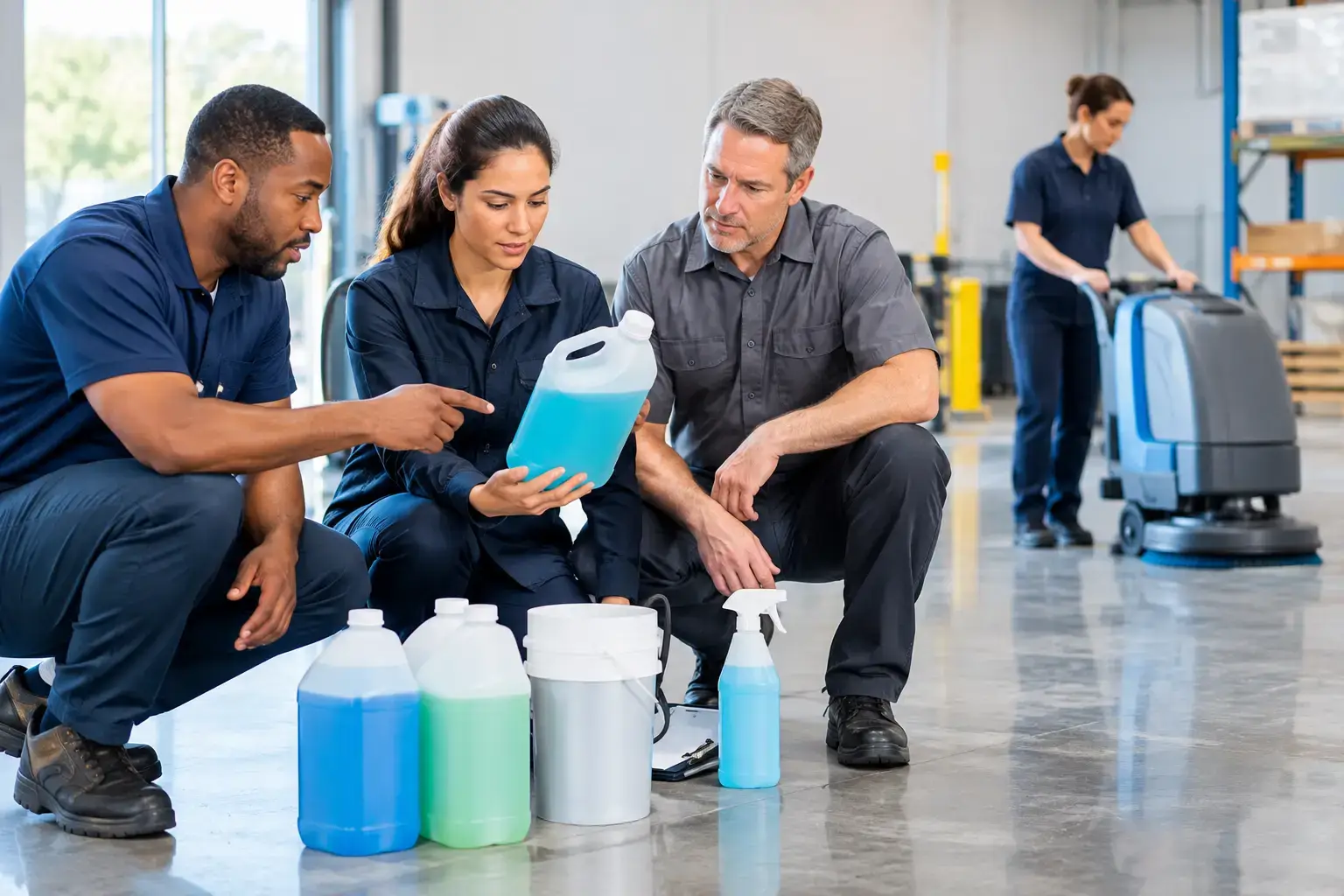
A short field trial can reveal more than a shelf comparison. Choose two or three representative zones with known soils and record the condition before cleaning. Use trained staff, follow the proposed dilution ratio, and document the equipment and procedure used. Then inspect both immediate results and the floor condition after normal traffic resumes.
The evaluation should include observations from the people who perform the work. Custodial staff and environmental services teams can identify issues that a purchasing review may miss, such as difficult mixing, odor concerns, streaking, excessive foam, or the need for repeated spot treatment. Their feedback is operational data, not an afterthought.
Where possible, compare results using the same cleaning frequency and equipment. Changing the chemical, machine setting, staffing level, and water temperature at the same time makes it difficult to know what actually improved. A disciplined test isolates the variables that matter.
When a Degreaser Is Needed Instead
Routine floor cleaning and heavy degreasing are related but different tasks. A neutral or multi-purpose floor cleaner may be appropriate for daily soil removal, while a dedicated industrial degreaser may be needed for accumulated oil, grease, or production residue. Trying to force one product into both roles can result in poor cleaning, overuse of chemical, or unnecessary surface stress.
This is where a facility cleaning program adds value. The goal is not to select the harshest chemistry available. It is to define which product and procedure should be used for daily maintenance, periodic deep cleaning, spill response, and high-soil areas. Clear use cases support training, reduce chemical misuse, and make ordering more consistent across departments or locations.
Veteran Commercial Cleaning approaches this decision through the same practical lens: professional-grade cleaning solutions should be evaluated for performance, safety, and documentation together. Facilities with demanding sanitation and compliance responsibilities need products that fit a controlled process, not a vague promise.
Make the Selection Defensible
The strongest selection is one a facilities manager can explain to operations, safety, procurement, and frontline staff. It addresses the actual soil load, protects the floor system, works with available equipment, and comes with documentation that supports safe deployment. It also recognizes trade-offs. A low-odor cleaner may require longer dwell time on heavy soils. A powerful degreaser may be reserved for targeted work rather than daily use. A concentrated product may reduce storage needs but demand reliable dilution control.
Before standardizing any industrial floor cleaner, run it where the risk and soil load are real, not just where the floor is easiest to clean. That simple discipline helps turn a chemical purchase into a safer, more reliable operating decision.