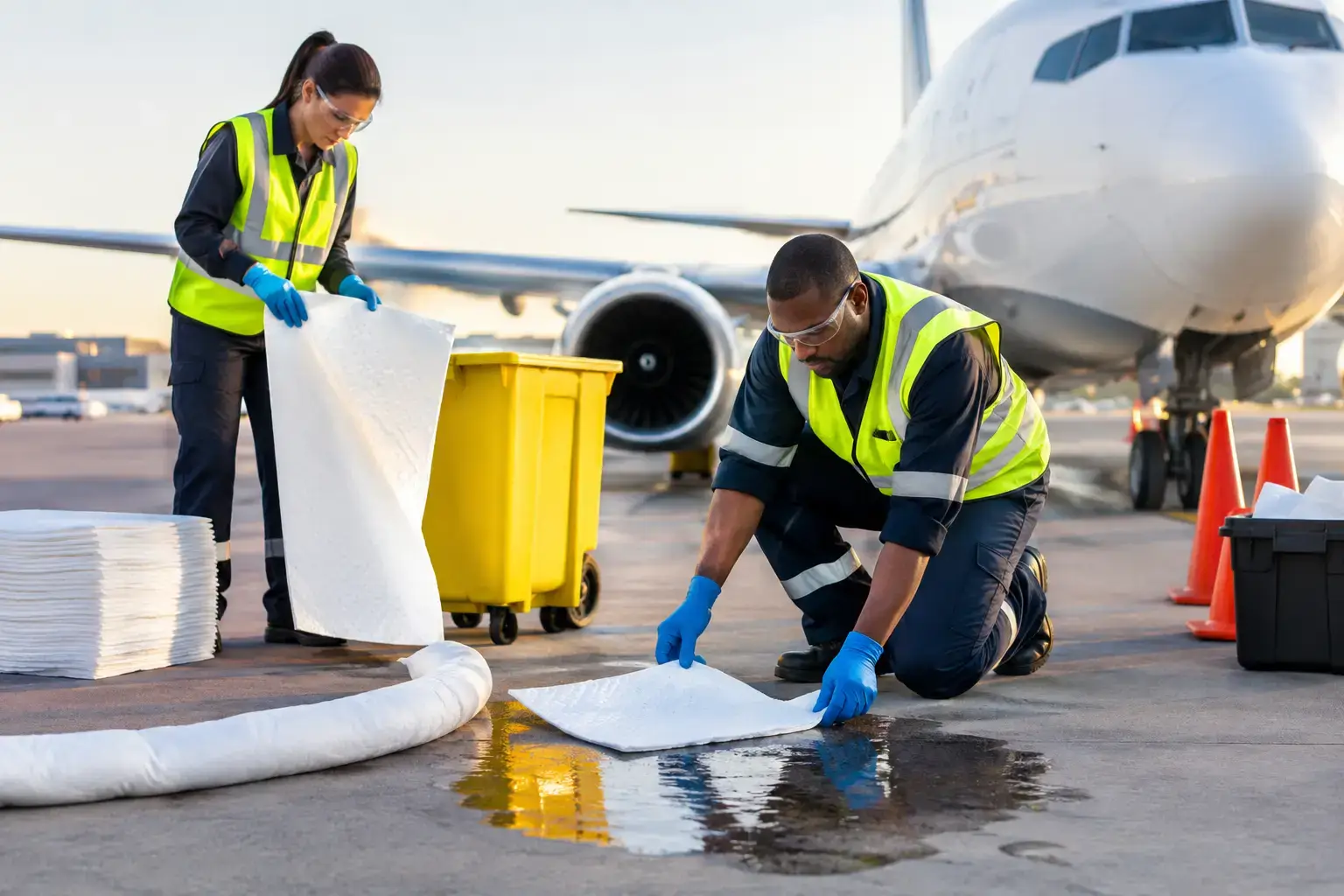
A fuel sheen beneath a service vehicle, hydraulic fluid near a gate, or lavatory waste in a terminal can become more than a housekeeping issue within minutes. Effective aviation spill protocols give crews a disciplined way to protect people, prevent contamination, preserve safe aircraft movement, and maintain the documentation critical facilities require.
Thank you for reading this post, don't forget to subscribe!For airport operators, fixed-base operators, hangar managers, contractors, and environmental services teams, the objective is not simply to remove visible residue. The response must control hazards, follow the airport’s emergency and environmental procedures, use compatible materials, and leave a clear record of what occurred.
Why Aviation Spill Protocols Require a Different Standard
Aviation environments combine public traffic, restricted operations, high-value equipment, fuel systems, electrical sources, and strict airfield access controls. A spill that would be minor in a conventional commercial building may create a ramp safety concern, a fire risk, a foreign object debris issue, or a reportable environmental event at an airport.
The material involved determines the response, but location matters just as much. A small oil spill in a maintenance bay may be contained with absorbent materials and managed under an established shop procedure. The same material near a storm drain, aircraft stand, taxi lane, or passenger pathway requires faster escalation and tighter area control.
Facilities should also distinguish between a cleaning incident and an emergency response event. Custodial or maintenance personnel may be trained to manage a limited, known spill within the bounds of their written procedures. Significant fuel releases, unknown chemicals, spills involving ignition hazards, or releases that threaten drainage systems should trigger the airport’s designated emergency notification process. Cleaning staff should not be expected to improvise beyond their training, assigned equipment, or personal protective equipment.
Build the Response Plan Before a Spill Happens
The most dependable spill response begins long before a container leaks or a hose fails. Each facility should maintain a written plan that aligns with its airport rules, lease requirements, emergency operations plan, environmental obligations, and workplace hazard communication program.
A usable plan identifies who has authority to stop work, isolate an area, notify airport operations, contact emergency responders, and approve return to service. It should also identify spill-kit locations, drainage protection points, waste accumulation procedures, and after-hours contacts. A plan stored in a binder but unknown to frontline staff is not operationally ready.
Define Spill Categories and Escalation Points
Not every release requires the same response. Categorizing spills helps personnel act quickly without minimizing risk. Facilities commonly separate events by material, volume, location, fire potential, exposure risk, and whether a spill has reached or may reach a drain, soil, or waterway.
Fuel, solvents, and other flammable liquids generally demand immediate control of ignition sources and notification under the facility’s emergency procedures. Hydraulic fluid, lubricants, coolants, and maintenance chemicals may require different absorbents, disposal methods, and surface-cleaning steps. Biohazardous materials, including blood or bodily fluids in terminal areas or aircraft-service locations, require trained personnel, appropriate PPE, and disinfectants used according to their labeled instructions.
The key is to establish a conservative escalation threshold. When the material is unknown, the release is moving toward drainage, vapors are present, or aircraft and public movement may be affected, personnel should isolate the area and call the designated authority rather than attempt a routine cleanup.
Stock Materials That Match the Hazards
Spill kits should reflect the actual materials and locations at the facility. A terminal janitorial closet, an aircraft maintenance hangar, a fueling area, and a ground-support equipment shop do not have identical risks.
At minimum, designated response stations may include compatible absorbents, drain covers or barriers where approved, disposal bags or containers, basic PPE, caution signage, tools for collecting used absorbent, and incident-report forms. Chemical labels and current safety data sheets must be readily available to the teams responsible for handling products.
Cleaning chemistry also deserves careful selection. Following bulk absorbent recovery, facilities may need a professional-grade cleaner or degreaser for remaining residue on noncritical surfaces. The product must be compatible with the surface, the contaminant, and the facility’s wastewater and environmental procedures. Environmentally responsible chemistry can reduce unnecessary chemical burden, but it does not remove the need for correct dilution, dwell time, PPE, or proper waste handling.
The First Minutes of Spill Response
Aviation spill response is best understood as a sequence: protect people, control the release, protect drainage and operations, then clean and document. The order matters.
First, personnel should stop the activity if it can be done safely and keep unauthorized people out of the area. In public-facing locations, this may mean securing a walking path immediately. On the ramp or in a hangar, it may require stopping nearby vehicle movement, pausing service activity, and notifying the appropriate operations contact.
Next, assess from a safe distance. Personnel should identify the material only when it is known from labels, process knowledge, or a safety data sheet. They should never rely on odor alone or attempt to identify an unknown liquid by touching it. If flammability, fumes, pressurized release, or chemical exposure is possible, the response shifts from routine containment to emergency notification.
If trained and authorized to proceed, responders can contain the spill with compatible materials, protecting drains and low points before the liquid migrates. They should use PPE specified by the product’s safety information and the site procedure. Containment should never place a worker in the path of moving aircraft, vehicles, or an active fuel hazard.
Only after the release is stopped or stabilized should cleanup begin. Used absorbents, contaminated wipes, disposable PPE, and collected liquid may require specific handling and disposal. Do not place contaminated material into ordinary trash simply because the visible spill has been removed.
Surface Recovery Is an Operational Decision
Removing the liquid is only part of restoring the area. Residue on polished floors, coated concrete, hangar surfaces, stairs, service roads, or equipment can leave slip hazards and attract further contamination. Yet aggressive cleaning can create its own problem if water, runoff, or incompatible chemicals enter drains or damage a surface.
The right method depends on the surface and the substance. For example, a degreasing step may be appropriate after oil recovery in a controlled maintenance area, while a fuel-related release near drainage requires environmental and emergency direction before any washdown is considered. Aircraft surfaces, sensitive components, and specialized coatings should be addressed only through approved maintenance procedures and products.
Before reopening the area, supervisors should verify that the visible hazard is gone, access controls have been removed appropriately, equipment is safe to use, and no residual slickness remains. In airside locations, the inspection should also consider debris control. Loose absorbent, torn packaging, or cleanup tools left behind can create an operational hazard of their own.
Documentation Is Part of the Protocol
A complete incident record protects the facility long after the cleanup team leaves. It supports internal review, environmental reporting decisions, contractor accountability, replenishment planning, and future training.
A practical report records the date, time, exact location, material involved, estimated quantity, source of the release, weather conditions when relevant, actions taken, personnel notified, containment methods, waste disposition, and photos when permitted by site policy. It should also identify whether drains, soil, aircraft areas, public spaces, or operational zones were threatened or affected.
Documentation should not be treated as fault-finding. Its value is operational learning. Repeated hydraulic-fluid releases from a piece of ground-support equipment, for example, may point to a maintenance issue. Frequent terminal spills in one location may indicate insufficient storage controls, poor product placement, or a gap in staff training.
Training Turns Procedures Into Performance
Written protocols work only when employees and contractors can apply them under pressure. Training should be role-based. A frontline employee may need to know how to secure an area and notify operations. A trained spill responder needs deeper instruction on PPE, material compatibility, drain protection, waste handling, and documentation. Supervisors need authority clarity and decision-making practice.
Short drills are often more useful than broad annual presentations alone. Run a scenario near a drain, at a gate, in a hangar, or in a terminal corridor. Ask who makes the first call, who brings the kit, how the area is controlled, and what information goes into the report. Then correct gaps while the procedure is still fresh.
Veteran Commercial Cleaning supports facilities that need institutional-grade cleaning supplies backed by the documentation and performance discipline high-compliance environments expect. The strongest spill programs pair that supply readiness with site-specific procedures, trained personnel, and a clear understanding of when to escalate.
A spill protocol earns its value in the first few minutes of an incident, when people need clear authority and the right materials within reach. Treat those minutes as an operational control point, not a cleaning afterthought.