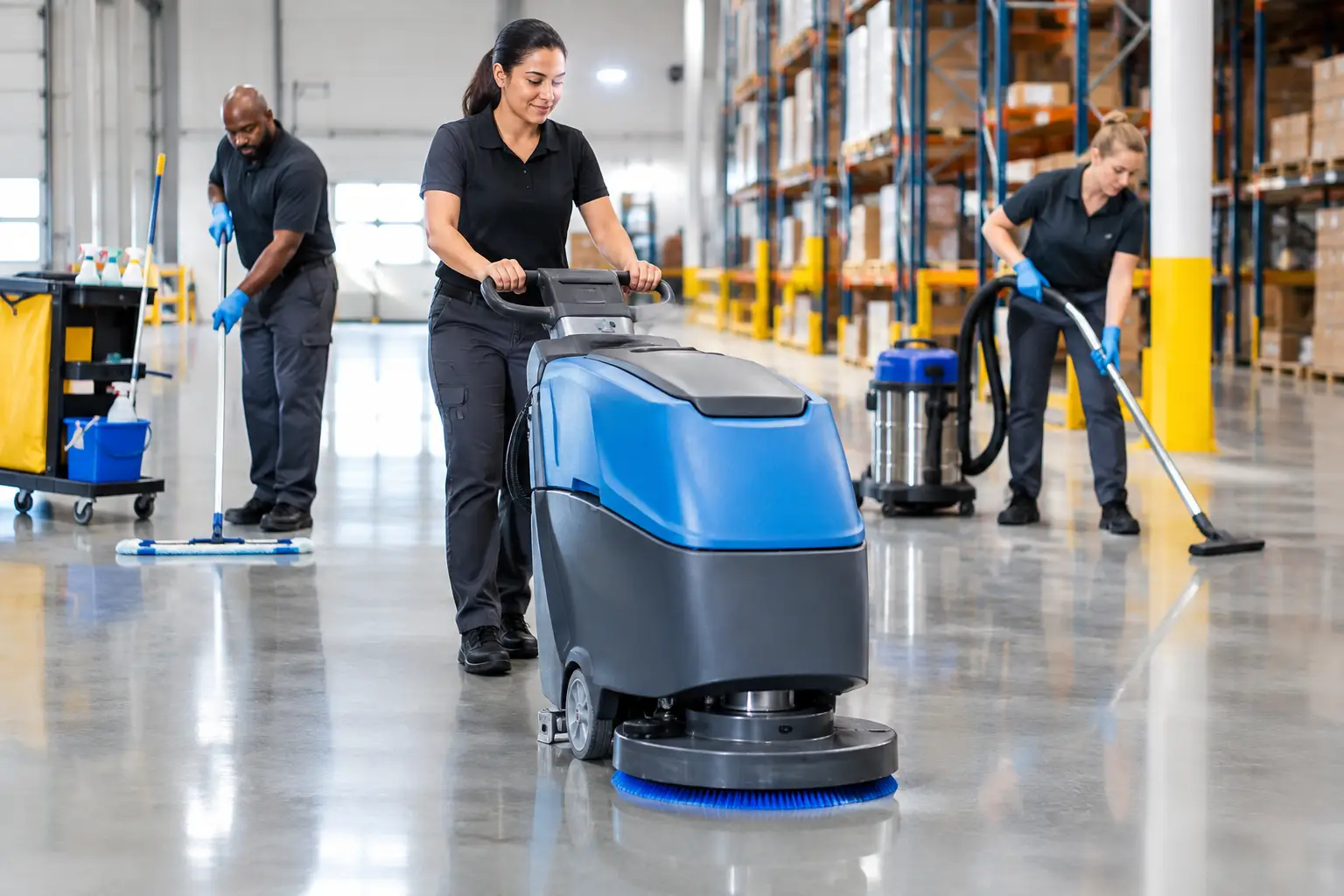
A warehouse floor can look acceptable from a forklift cab and still create a serious operational problem. Fine dust compromises traction, oil films spread under vehicle tires, and residue around docks or production lines can turn routine movement into a slip, trip, or contamination risk. Knowing how to clean warehouse floors means building a repeatable process around soil type, traffic patterns, floor condition, and worker safety – not simply running a scrubber after hours.
Thank you for reading this post, don't forget to subscribe!For facilities managers and operations teams, the goal is a floor that is safer to work on, easier to inspect, and maintained without damaging concrete, coatings, drains, or adjacent operations. The right approach also creates a defensible record of what was cleaned, when it was cleaned, and which products and procedures were used.
Start With the Floor, the Soil, and the Risk
Warehouse floors are not all cleaned the same way. Sealed concrete, unsealed concrete, epoxy-coated surfaces, polished concrete, and specialty anti-slip coatings each respond differently to water, agitation, and chemistry. A cleaning program should begin with a walk-through that identifies the floor material, damaged areas, drains, expansion joints, loading zones, and locations where water cannot be used freely.
Next, identify the soil. Dry dust, cardboard fibers, pallet debris, tire marks, hydraulic fluid, food residue, adhesive, and embedded grease require different methods. Applying a degreaser to ordinary dust wastes labor and can leave residue if it is not properly recovered. Sweeping oily soil without first controlling the spill can spread the hazard across the facility.
Risk should determine cleaning frequency. High-traffic forklift lanes, shipping and receiving areas, break rooms, battery charging stations, entrances, and production-adjacent zones generally need more attention than low-use storage aisles. A documented zone map helps teams assign the appropriate daily, weekly, and periodic work.
How to Clean Warehouse Floors: A Controlled Process
The most effective cleaning process follows a consistent order: contain the area, remove dry debris, treat soil, mechanically clean, recover solution, inspect, and document. Skipping steps usually increases rework or leaves behind the very residue that causes safety concerns.
1. Secure the work area
Schedule cleaning around traffic whenever possible. Use visible wet-floor signage, cones, barricades, or temporary route controls before water or cleaning solution reaches the floor. Coordinate with forklift operators, warehouse leads, and security or safety personnel when cleaning intersects with active shipping, production, or public access.
Do not block emergency exits, fire equipment, electrical panels, or required egress routes. In facilities with continuous operations, clean in manageable sections so that the work area remains controlled and dry before normal traffic resumes.
2. Dry sweep or vacuum first
Remove loose debris before introducing water or chemistry. This includes grit, stretch wrap, wood fragments, labels, dust, and powdered materials. A mechanical sweeper or industrial vacuum is usually more effective than a push broom in large areas because it captures fine particulate instead of redistributing it.
This step protects scrubber pads and squeegees, improves chemical contact with the actual soil, and prevents debris from entering drains. In regulated environments, captured debris may require disposal according to the facility’s waste procedures.
3. Pre-treat spills, grease, and tire marks
Spot-treat heavy soil before the main scrub. Apply an appropriate industrial cleaner or degreaser at the correct dilution, following the product label and Safety Data Sheet. Give the chemistry enough dwell time to break down soil, but do not allow it to dry on the surface.
Use agitation where needed. A deck brush, floor machine, or scrubber attachment can lift embedded grime more effectively than chemical alone. Avoid aggressive pads or brushes on coated floors unless the manufacturer confirms compatibility. The fastest-looking method can become the most expensive if it dulls a finish or removes protective coating.
For active oil or chemical spills, follow the site’s spill response plan first. Cleaning personnel should not improvise around unknown materials, hazardous liquids, or leaks that have not been isolated.
4. Scrub using the right equipment and solution
For broad warehouse areas, an auto scrubber provides consistent agitation, solution control, and recovery. Select pads or brushes based on the floor and soil load. Softer pads are often appropriate for routine maintenance on finished surfaces, while more aggressive brushes may be necessary for textured concrete or stubborn grime.
Use only as much solution as the machine can effectively recover. Overwetting creates slip hazards, pushes contaminated water into joints and drains, and slows return to service. Clean, maintained squeegees are essential. If the scrubber leaves streaks or standing water, stop and correct the equipment issue before continuing.
Manual mopping can be suitable for edges, tight spaces, small rooms, and spill response, but it is rarely the best primary method for a large warehouse. Mop water becomes contaminated quickly, which can transfer soil rather than remove it. When mopping is necessary, change solution frequently and use a clean mop head.
5. Recover, rinse when required, and dry completely
Recovery is not an afterthought. Dirty solution must be removed from the floor so it cannot dry into a film that attracts more soil or reduces traction. If the selected cleaner requires rinsing, perform that step with clean water and recover the rinse water as well.
Inspect the floor from several angles under adequate lighting. Look for streaking, oily patches, remaining tire marks, pooled water, and residue along rack legs, dock doors, and wall edges. Allow the floor to dry fully before reopening it to pedestrian or vehicle traffic.
Choose Chemistry for Performance and Compatibility
A warehouse cleaner should match the task and the facility’s compliance requirements. General-purpose cleaners may handle routine soil, while degreasers are designed for petroleum-based residue, lubricants, and heavy traffic grime. Disinfectants belong in areas where disinfection is required, such as restrooms, break rooms, health-related spaces, or designated high-touch zones. A disinfectant is not automatically the right choice for an entire warehouse floor.
Environmentally responsible chemistry can support safer operations when it still delivers the required performance. The key is to evaluate product documentation, approved use surfaces, dilution instructions, dwell times, disposal guidance, and compatibility with floor coatings and equipment. Procurement teams should retain SDS sheets, technical data, and any required certifications in the facility’s cleaning records.
Never mix cleaning products. Mixing chemicals can reduce effectiveness, damage surfaces, or create dangerous fumes. Use clearly labeled secondary containers and train staff on dilution control, personal protective equipment, and emergency response requirements.
Build a Warehouse Floor Cleaning Schedule
A practical schedule is based on use, not assumptions. Daily attention is typically appropriate for entrances, docks, traffic lanes, restrooms, break areas, and locations with routine debris or fluid exposure. Weekly cleaning may cover wider storage areas and low-traffic aisles. Periodic deep cleaning can address accumulated soil near equipment, under racking where accessible, and in areas affected by seasonal weather or production changes.
The schedule should also account for weather. Rain, snow, road salt, and mud can sharply increase entryway and dock contamination. In dry climates or dusty operations, frequent dry sweeping may matter more than adding extra wet cleaning cycles.
Track completion by zone, date, shift, employee or contractor, equipment used, chemicals used, and observations requiring follow-up. This documentation supports internal quality control and can be valuable during safety reviews, audits, incident investigations, and contract performance evaluations.
Train for Safety, Not Just Speed
Cleaning crews need clear standard operating procedures, but procedures only work when they are reinforced in the field. Training should cover chemical labels and SDS information, dilution and dwell time, machine operation, battery charging practices, PPE, signage, spill escalation, drain protection, and post-cleaning inspection.
Supervisors should verify that operators know when to stop. A damaged floor coating, an unknown spill, a malfunctioning scrubber, or a blocked route is not a condition to work around quietly. Escalating the issue protects people, property, and operational continuity.
Veteran Commercial Cleaning supports facilities that need institutional-grade cleaning performance with documentation, responsible chemistry, and operational discipline. For warehouse environments, that discipline begins at floor level: use the correct method, verify the result, and leave every work zone safer than it was before cleaning started.