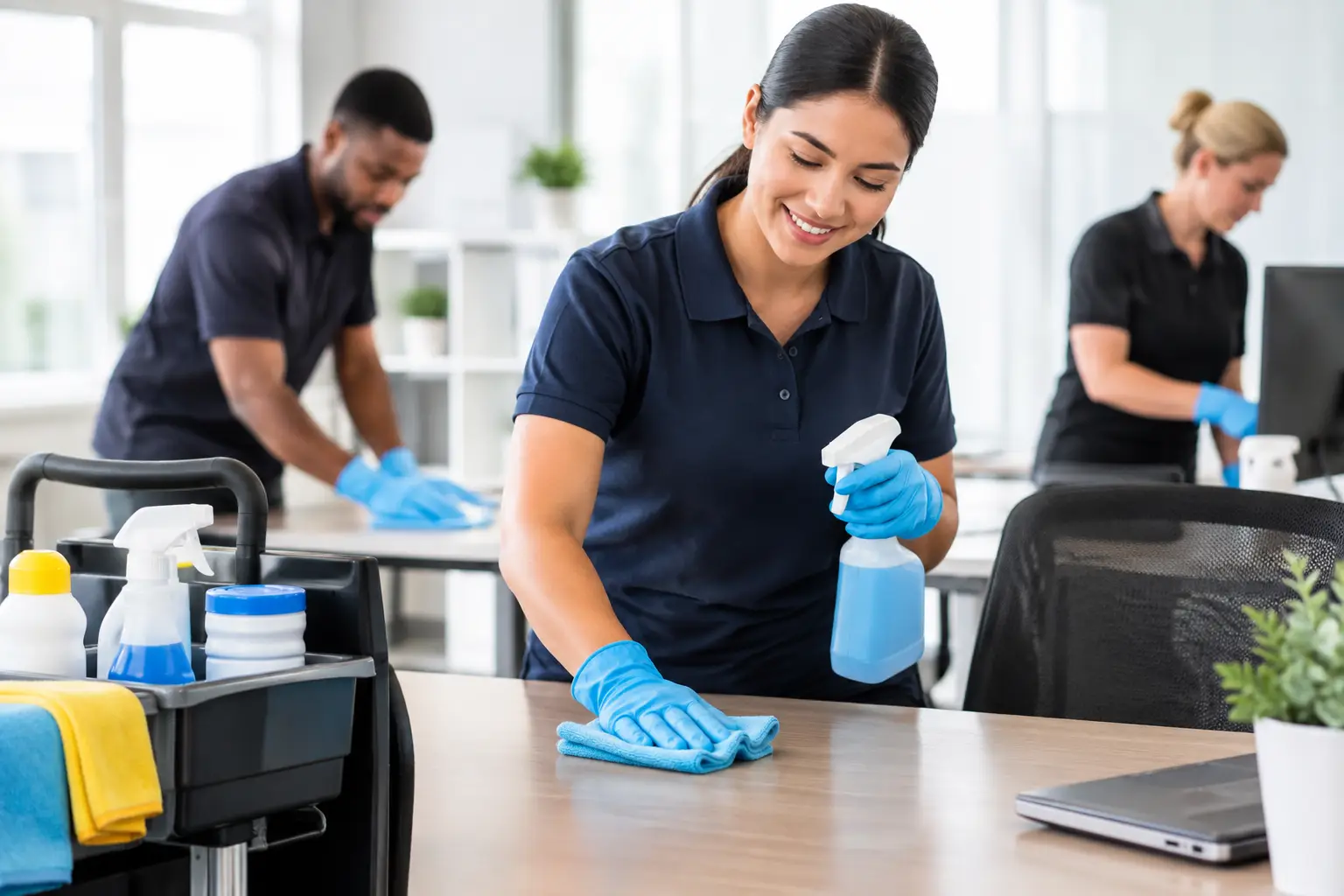
Cross contamination is rarely caused by one obvious failure. It usually occurs when a contaminated hand, tool, cart, container, or surface moves from one area to another without control. Knowing how to prevent cross contamination requires more than selecting a disinfectant. It requires a disciplined facility system that controls people, equipment, chemicals, workflows, and documentation.
Thank you for reading this post, don't forget to subscribe!For hospitals, manufacturing plants, airports, government buildings, food-adjacent operations, and military facilities, the stakes are high. A breakdown can spread pathogens, introduce allergens or foreign material, compromise a production process, expose employees to incompatible chemicals, or create an audit finding that disrupts operations. Prevention must be built into daily work, not added after an incident.
Start With a Clear Definition of the Risk
Cross contamination means the unintended transfer of a contaminant from one person, object, area, or material to another. The contaminant may be biological, chemical, physical, or allergenic. The controls that work best depend on what is being protected and where the transfer can occur.
In a healthcare setting, the primary concern may be transferring infectious organisms from a patient room to a shared clinical space. In manufacturing, the concern may include oils, metal fines, dust, residues, or microorganisms moving into a controlled process. In a public facility, high-touch surfaces and shared equipment can carry contamination between employees, visitors, and work zones. Food service areas require additional attention to raw materials, ready-to-eat items, and allergens.
A risk assessment should identify the contaminant, the transfer route, the affected area or process, and the consequence of failure. This prevents a common mistake: applying the same cleaning routine everywhere, regardless of risk.
Control Movement Between Clean and Dirty Zones
The most dependable prevention measure is separation. Establish defined zones for receiving, storage, production, restrooms, patient care, break areas, waste handling, and other functions with different contamination risks. Where possible, use physical barriers, marked floor boundaries, dedicated entrances, and controlled traffic patterns.
Employees and contractors should understand which materials and equipment may enter each zone. A cart used in a restroom should not move into a food preparation area or clean office space without a defined decontamination process. Likewise, tools used for waste removal, spill response, or maintenance work should not return directly to general cleaning service.
Color coding is useful when it is consistent and documented. For example, a facility may assign one color to restroom tools, another to general surfaces, and another to food-contact or clinical areas. Color alone is not a control. It works only when teams receive training, replacement supplies are managed correctly, and supervisors enforce the system.
Design One-Way Workflows
Whenever operations allow it, plan work from cleaner areas toward dirtier areas. Clean high-priority areas before restrooms, waste rooms, loading docks, or known contaminated spaces. This approach reduces the chance that workers carry contaminants back into clean zones on gloves, footwear, equipment, or clothing.
One-way workflow also applies to materials. Dirty linens, waste, used wipes, returned tools, and cleaning solution containers need a controlled route that does not cross clean supply staging areas. In high-compliance facilities, map these routes visually and review them during safety walks.
Use the Right Tool for the Right Area
Reusable tools can be effective and sustainable, but only when their handling process is controlled. Microfiber cloths, mop heads, brushes, buckets, spray bottles, and floor equipment can all become transfer points if they are reused across zones without laundering, disinfection, or replacement.
Assign tools by area and task. Store clean tools separately from used tools, and use closed or clearly labeled containers for transport. Never place used cloths or mop heads back into a clean supply cart. For high-risk work, single-use wipes or other disposable materials may be the better operational choice, particularly when laundering capacity, turnaround time, or chain-of-custody controls are limited.
Equipment requires the same discipline. Vacuum units, autoscrubbers, floor machines, and service carts should have documented cleaning intervals and inspection points. Wheels, handles, touchscreens, hoses, and recovery tanks are often overlooked, even though they travel through multiple parts of a facility.
Hand Hygiene and Glove Practices Must Work Together
Gloves are not a substitute for hand hygiene. They can create a false sense of security when employees touch a contaminated surface and then handle a door, tablet, cart, phone, or clean supply while wearing the same pair.
Train staff to perform hand hygiene before starting work, after removing gloves, after handling waste or soiled materials, after restroom use, and before moving into a clean task. Facilities should also make compliance practical by placing handwashing stations or hand sanitizer where workflow demands them, not only where they are convenient to install.
Gloves should be changed when moving between tasks, zones, or contamination levels. Employees must also know how to remove gloves without contaminating their hands. When personal protective equipment is required, the sequence for putting it on and taking it off should be written, trained, and monitored.
Clean First, Then Disinfect When Required
A surface that looks clean may still carry contamination. Just as importantly, a surface with visible soil can limit the performance of a disinfectant. Cleaning removes dirt, oils, organic matter, and debris. Disinfection uses an appropriate registered product to reduce or eliminate targeted microorganisms according to its label directions.
The sequence matters. Remove visible soil first, then apply the disinfectant at the required dilution and keep the surface wet for the full contact time listed on the label. Wiping a product away immediately, using too little solution, or applying it to an incompatible surface can undermine the process.
Facilities should avoid assuming that stronger chemistry always produces better results. The correct product depends on the organism or soil, surface material, ventilation, worker exposure considerations, dwell time, and applicable regulatory requirements. Industrial performance and environmentally responsible chemistry can coexist when products are selected for the actual task and used as directed.
Prevent Chemical Cross Contamination
Cross contamination is not limited to germs. Mixing incompatible chemicals can create hazardous fumes, reduce product effectiveness, damage surfaces, or expose employees to serious injury. Decanting products into unlabeled bottles, reusing containers, and using one dispensing tool for multiple chemicals are common sources of preventable error.
Maintain original labels or compliant workplace labels on every secondary container. Use dedicated dispensing equipment where required, verify dilution procedures, and keep safety data sheets accessible to employees. Store chemicals by compatibility, not simply by available shelf space. Supervisors should verify that staff understand which products may never be mixed.
This control is especially relevant when facilities use degreasers, disinfectants, sanitation systems, and specialty cleaners across different departments. A documented chemical management program protects both cleaning quality and worker safety.
Build Verification Into the Cleaning Program
If a process is not inspected, it eventually becomes inconsistent. Effective programs define what must be cleaned, how often, by whom, with which materials, and how completion will be verified. Standard operating procedures should be specific enough for a new employee to follow without relying on assumptions.
Use routine inspections to check high-touch points, tool segregation, supply storage, chemical labeling, and employee technique. In critical settings, verification may include checklists, supervisory sign-off, ATP testing, environmental monitoring, or other methods appropriate to the operation. The goal is not paperwork for its own sake. Documentation creates accountability, supports corrective action, and provides evidence of control during an audit or incident review.
When deficiencies are found, address the system rather than only the individual. Repeated glove misuse may indicate poor supply placement. A contaminated cart may point to an unrealistic turnover schedule. Missed contact times may mean the selected product does not fit the pace of the task.
Train for Real Conditions, Not Just Orientation
Annual training alone does not prevent cross contamination. Teams need short, recurring instruction tied to the actual areas they serve. Demonstrate how to change gloves, manage cloths, clean equipment, dilute products, respond to spills, and transition between zones. Then observe performance during normal shifts.
Training should include temporary workers, contractors, maintenance staff, and anyone who handles shared equipment or enters controlled areas. Language access, clear signage, and hands-on demonstrations matter because contamination controls often fail at the point of action, not in the written policy.
For procurement and operations leaders, the practical standard is simple: purchase supplies that support the workflow you expect employees to follow. Veteran Commercial Cleaning supports facilities that need institutional-grade cleaning solutions and the documentation needed to apply them with confidence.
The strongest contamination-control program is visible in ordinary moments: a worker changes gloves before touching clean supplies, a cart stays within its assigned zone, a disinfectant remains wet for its full contact time, and a supervisor corrects a gap before it becomes an incident. Those small, repeatable decisions protect people, processes, and the facility’s operational trust.