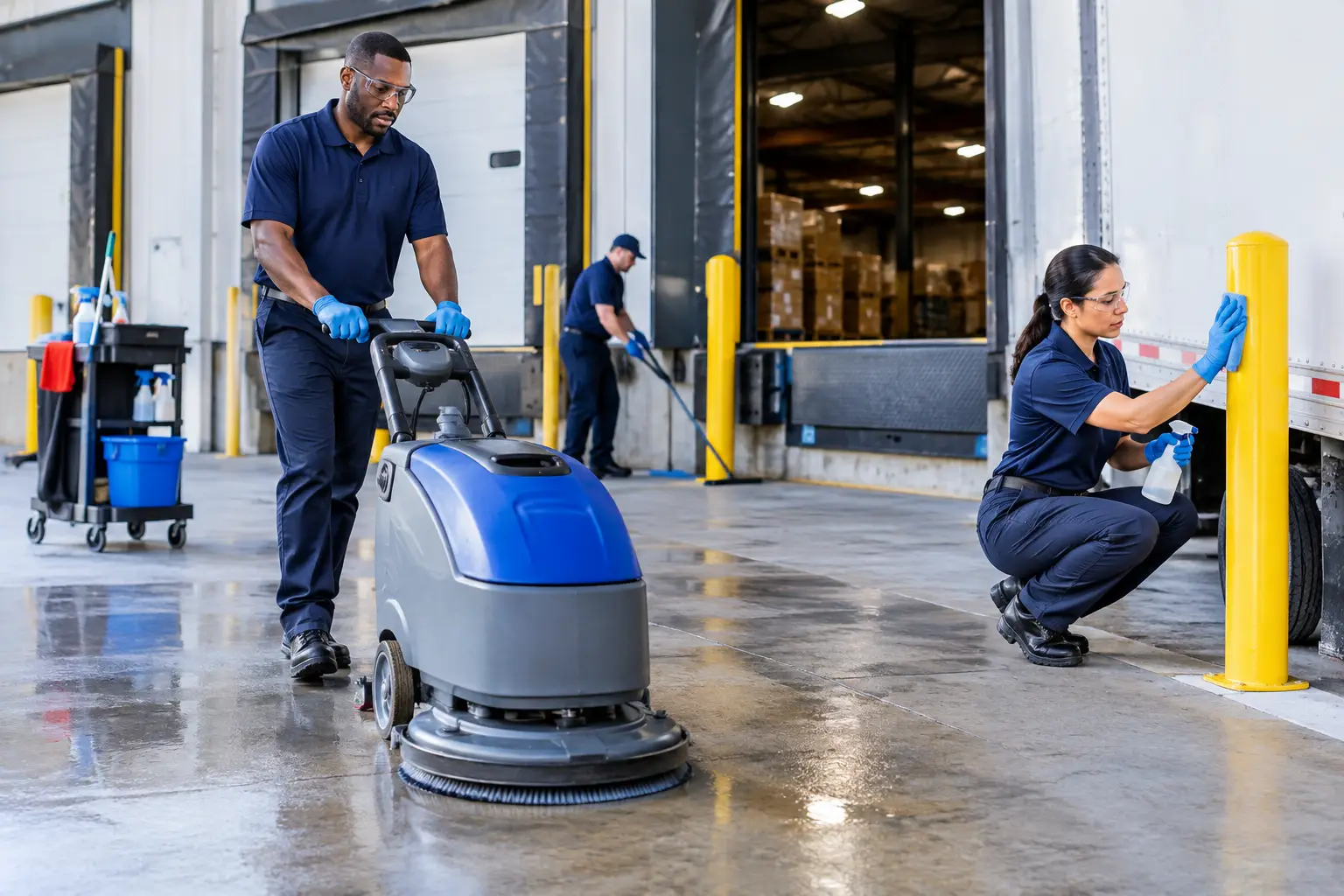
A loading dock can move product efficiently while quietly moving dirt, moisture, exhaust residue, pallet debris, and contaminants directly toward a facility. Knowing how to sanitize loading docks is therefore not a cosmetic housekeeping task. It is an operational control that protects employees, inventory, interior work areas, and the compliance posture of the facility.
Thank you for reading this post, don't forget to subscribe!For manufacturing plants, healthcare distribution areas, government facilities, aviation operations, and high-traffic commercial properties, the right process must balance sanitation performance with dock availability. A dock cannot remain closed for hours just because it needs attention. The goal is a repeatable, documented routine that targets risk without creating slip hazards, chemical exposure concerns, or avoidable interruptions to shipping and receiving.
Start With a Dock-Specific Risk Assessment
Loading docks collect a different soil load than offices, corridors, or production rooms. Forklift traffic can track in oils, tire residue, and outdoor debris. Open doors allow dust, pests, rainwater, and airborne contaminants to enter. Damaged pallets, shrink wrap, and leaking packages can create localized hazards that require more than a standard floor-cleaning pass.
Walk the dock before selecting a process. Identify where vehicle tires cross the threshold, where personnel enter the building, where waste is staged, and where water tends to pool. Inspect dock plates, bumpers, door handles, control panels, rails, trash receptacles, and shared equipment. These touchpoints may require more frequent disinfection than the open concrete surface.
The level of sanitation should match the facility and the event. A dry dock handling sealed general merchandise may need routine cleaning and targeted disinfection of high-touch points. A dock supporting food, healthcare supplies, pharmaceuticals, or sensitive manufacturing materials may require more frequent sanitation, tighter documentation, and immediate response to spills or compromised shipments.
How to Sanitize Loading Docks in the Right Order
Sanitizing is most effective when the surface is already clean. Applying a disinfectant or sanitizer over grease, dust, and organic residue may reduce performance and waste product. The sequence matters: remove debris, clean the surface, apply the appropriate sanitizer or disinfectant, allow the required contact time, then return the area to service only when it is safe.
Begin by controlling traffic. Schedule work during a lower-volume receiving period when possible, and communicate the affected zone to drivers, warehouse personnel, contractors, and forklift operators. Use visible barriers and wet-floor warnings. If the entire dock cannot be taken out of service, clean in sections so a safe travel path remains open.
Remove loose debris first. Collect broken pallet wood, banding, stretch film, cardboard fragments, and visible waste. Sweep or use approved vacuum equipment where appropriate. Dry removal prevents loose material from becoming slurry when water or cleaner is introduced.
Next, address oils, tire marks, and embedded grime with an industrial degreaser matched to the dock surface and soil type. Concrete, coated concrete, metal dock plates, and painted equipment may have different compatibility requirements. Follow the product label and technical documentation for dilution, dwell time, application method, and rinsing needs. More chemical is not automatically better. Overapplication can leave residue, increase slip risk, and complicate wastewater control.
After the soil has been removed, apply a registered disinfectant or sanitizer suitable for the intended use and surface. For high-touch areas such as handles, controls, railings, time clocks, and shared equipment, use an application method that provides complete, even coverage without oversaturation. For broad floor areas, use equipment and procedures designed for the product and facility conditions.
Contact time is not optional. The treated surface must remain visibly wet for the full label-required time to achieve the stated antimicrobial claim. Wiping a product away too soon, or allowing it to dry before the required time, can undermine the entire procedure. Train crews to understand this distinction and to use only label-supported claims in cleaning records.
Protect Workers, Product, and the Facility
Loading docks present overlapping safety risks. Water, degreaser, and disinfectant can make smooth concrete, dock plates, and ramps slippery. Forklift operators may have reduced visibility around barriers. Chemical mist can travel toward personnel or materials if spray application is poorly controlled.
Use the personal protective equipment specified by the product safety data sheet and label. Depending on the chemistry and task, this may include gloves, eye protection, protective footwear, or additional controls. Ensure workers know where to find SDS sheets, how to respond to a spill, and when to escalate an exposure or equipment concern.
Ventilation deserves close attention. Docks may be partially enclosed, particularly during cold weather or overnight shifts. Keep loading doors open when operationally safe, use local ventilation where available, and avoid creating unnecessary aerosol exposure. Do not mix cleaning chemicals, and do not transfer products into unlabeled containers.
Protect nearby inventory before sanitation begins. Move vulnerable materials away from the work zone or cover them when appropriate. This is especially important around food-related packaging, medical supplies, electronics, paper goods, and products that can be damaged by moisture. Sanitation should reduce risk, not create a product-loss event.
Give High-Touch and High-Transfer Areas Extra Attention
A dock floor matters, but it is not the only pathway for contamination. Hands, wheels, tools, and shared controls move contaminants between the exterior environment and interior operations. A disciplined program prioritizes the points where that transfer is most likely.
Focus routine disinfection on door handles, dock leveler controls, keypad surfaces, handheld scanners, shared radios, guardrails, forklift touchpoints, trash lids, and employee entry doors. Clean these surfaces before disinfecting them, particularly when visibly soiled. For electronics, use an approved compatible method rather than spraying liquid directly onto equipment.
Forklift tires and pallet jack wheels deserve practical consideration. Full wheel sanitation may not be necessary in every facility, but facilities with controlled production zones should evaluate wheel-cleaning stations, designated travel lanes, or transition mats at critical thresholds. The right control depends on the sensitivity of the area being protected and the volume of vehicle traffic.
Build Frequency Around Conditions, Not Guesswork
There is no single sanitation frequency that fits every loading dock. A low-traffic dock in a dry climate has different needs than a 24-hour distribution point exposed to rain, diesel residue, frequent deliveries, and multiple shift changes. Establish a baseline schedule, then adjust it based on traffic, weather, incidents, seasonal pest pressure, and the facility’s compliance requirements.
Daily cleaning may be appropriate for active docks, with high-touch disinfection performed once per shift or more often during elevated illness concerns. Deep degreasing may be scheduled weekly or as inspection findings require. Immediate response is necessary after chemical leaks, broken containers, pest activity, bodily fluid incidents, floodwater intrusion, or other contamination events.
Avoid treating sanitation as a checklist completed regardless of conditions. Supervisors should have authority to increase frequency when a dock is visibly soiled or when operational changes raise the risk level. Conversely, facilities should avoid unnecessary chemical use in low-risk areas. Responsible chemistry means applying the correct product, in the correct amount, for a documented purpose.
Document the Work for Compliance and Continuity
In regulated and high-compliance environments, an undocumented sanitation activity may be difficult to verify during an audit, incident review, or customer assessment. A useful log records the date and time, zone serviced, condition observed, products used, dilution or lot information when applicable, contact time, employee initials, and corrective actions taken.
Keep current SDS sheets, technical specifications, and product labels accessible to supervisors and cleaning personnel. If a facility requires approved product lists or environmental health and safety review, confirm that each chemical is authorized before it enters the dock program. Procurement teams should also confirm that product claims align with the facility’s intended application rather than relying on broad marketing language.
Periodic inspections turn records into improvement. Review recurring issues such as standing water, damaged seals, overflowing trash, repeated oil spots, or missing barriers. Many sanitation failures are really maintenance or process failures. Replacing a worn dock seal, correcting drainage, or relocating waste staging can reduce chemical demand and improve results.
Train for Consistency at Every Shift
The best sanitation protocol fails when it exists only in a binder. Train employees and contractors on the sequence of cleaning, product handling, contact times, traffic controls, PPE, and reporting expectations. Use clear task instructions for each dock zone, especially where one team cleans the area and another team operates material-handling equipment.
Training should also explain why shortcuts create risk. Skipping pre-cleaning can reduce disinfectant performance. Reopening a wet dock too early can cause falls. Using an unapproved chemical can create documentation gaps or damage surfaces. When crews understand the operational reason behind each control, compliance becomes more reliable.
A clean loading dock is a visible standard, but a sanitized dock is a managed process. Establish the routine, verify the chemistry, protect the work area, and document each cycle. That discipline keeps the receiving threshold from becoming the weak point in an otherwise well-controlled facility.