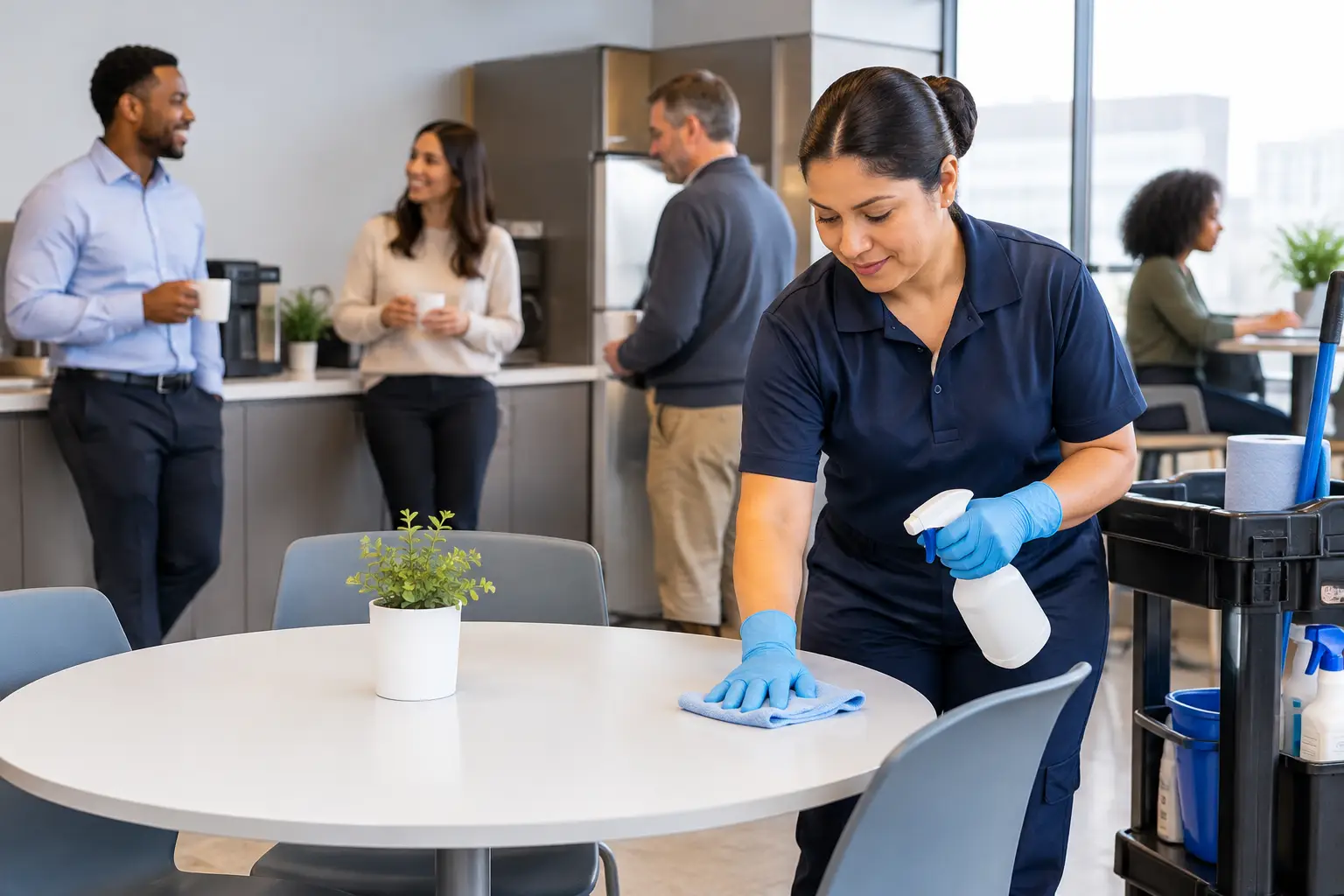
A break room can become a sanitation weak point long before it looks dirty. Shared refrigerators, microwave buttons, coffee equipment, tables, sink fixtures, and vending areas concentrate hand contact, food residue, moisture, and waste in one small space. To sanitize break rooms effectively, facilities teams need more than a quick wipe at the end of a shift. They need a defined process that supports employee safety, food-area hygiene, chemical compliance, and uninterrupted operations.
Thank you for reading this post, don't forget to subscribe!For manufacturing plants, government offices, healthcare environments, aviation facilities, and other high-traffic workplaces, the break room is not separate from the facility’s overall sanitation program. It is a shared-use environment where poor practices can spread contamination into production, administrative, clinical, or public-facing areas. A disciplined plan reduces that exposure while giving supervisors a clear standard to inspect and document.
Why Break Rooms Need a Separate Sanitation Plan
Break rooms combine several conditions that make routine sanitation necessary. Employees eat and drink there, so crumbs, spills, grease, and food packaging accumulate quickly. The same employees then touch high-contact surfaces before returning to work areas. In facilities with rotating shifts, the room may remain in near-constant use for most of the day.
A general cleaning schedule often overlooks these conditions. Floors may be swept, trash may be removed, and tables may receive an occasional wipe, but refrigerator handles, faucet levers, cabinet pulls, condiment stations, and appliance controls can be missed. Those gaps create inconsistent results and make it difficult to verify that the space is being maintained to the facility’s standards.
The right level of sanitation depends on the environment. A small office break room may need a straightforward daily routine with additional attention during illness events. A healthcare, food-adjacent, military, or industrial facility may require more frequent service, tighter chemical controls, documented completion, and alignment with site-specific infection-control or safety procedures.
Start With Cleaning, Then Sanitize
Sanitizing is not a substitute for cleaning. Soil, grease, food residue, and dried spills can prevent a sanitizer or disinfectant from contacting the surface effectively. The proper order is simple: remove debris, clean the surface with the appropriate cleaner, then apply the sanitizing or disinfecting product according to its label directions.
This distinction matters especially around microwaves, coffee stations, counters, and sinks. A visibly clean surface may still require sanitizing, but a surface covered in residue must be cleaned first. Rushing this sequence wastes product and can create a false sense of security.
Facilities should also avoid treating every chemical as interchangeable. A product designed for degreasing may not provide sanitizing claims. A disinfectant may require a specific dwell time and may not be appropriate for every food-contact surface without a rinse step. Product labels, Safety Data Sheets, technical specifications, and site procedures should guide selection and use.
Define the Surfaces That Matter Most
A practical sanitation plan identifies the surfaces employees contact repeatedly, not just the areas that appear dirty. High-priority break room touchpoints typically include:
- Refrigerator, freezer, microwave, and vending machine handles
- Coffee maker controls, water dispensers, and shared condiment stations
- Tables, chair backs, countertops, and cabinet pulls
- Sink faucets, soap dispensers, paper towel dispensers, and door hardware
- Trash and recycling lids, especially around food-preparation and disposal areas
This list should be adjusted to match the room. A break room with a commercial ice machine, shared food storage, or multiple shift changes requires more control points than a small employee lounge.
Set Clear Ownership by Shift
A sanitation plan fails when responsibility is assumed rather than assigned. Determine whether environmental services, janitorial staff, a facilities team, department leads, or a combination of roles will perform each task. In 24-hour operations, assign responsibilities by shift so the same surfaces are not neglected during handoffs.
Employee participation can help, particularly for spill response and personal food storage, but it should not replace a trained cleaning routine. Workers can be expected to clean up after themselves. The facility should still maintain responsibility for recurring sanitation, chemical handling, supply replenishment, and quality checks.
How to Sanitize Break Rooms During Daily Operations
The most reliable routines are short enough to complete consistently and detailed enough to protect high-contact areas. Start by removing waste, loose debris, and expired food items according to facility policy. Clean visible spills and soil from counters, tables, sink areas, and appliance exteriors before applying the selected sanitation product.
Apply the product at the dilution and contact time stated on the label. Contact time is the period a surface must remain visibly wet for the product to achieve its stated claim. Wiping a product dry immediately can reduce effectiveness. If the surface is used for direct food contact, follow label instructions for rinsing or additional handling.
Use clean, designated cloths, wipes, or disposable towels to prevent cross-contamination. A cloth used on a trash lid should not move to a countertop or coffee station. Color coding, labeled caddies, or task-specific disposable materials can make this separation easier for staff to follow.
When the room is occupied, schedule work around peak meal periods whenever possible. For high-use sites, a quick sanitation pass between breaks may be more effective than a single lengthy service after hours. The trade-off is labor coverage, but frequent attention to touchpoints often prevents larger cleanup demands and reduces avoidable complaints.
Build a Frequency Schedule That Matches Real Use
There is no single interval that fits every workplace. Frequency should reflect employee count, shift patterns, food activity, visitor access, illness concerns, and the critical nature of the facility. A lightly used administrative break room may be adequately serviced once daily, while a manufacturing plant with multiple shifts may need touchpoint sanitation several times per day.
A useful approach is to separate tasks by frequency. High-contact surfaces and visible spills should receive attention throughout the day. Counters, tables, sinks, appliance exteriors, and waste areas should be cleaned and sanitized at least daily. Refrigerators, cabinet interiors, wall splashes, and detailed appliance cleaning can be placed on a weekly or scheduled periodic rotation.
During elevated illness activity, after a contamination event, or when a facility has a heightened sanitation requirement, increase service frequency and document the adjustment. Do not rely on a generic calendar if usage patterns have changed. A break room serving overtime crews, contractors, or temporary staff may need a revised schedule even if the room itself has not changed.
Train for Chemical Safety and Consistent Results
Break room sanitation involves chemicals, food areas, electrical equipment, and wet floors. Training should cover more than where supplies are stored. Personnel need to understand dilution requirements, dwell times, surface compatibility, required personal protective equipment, safe storage, and what to do if a product is spilled or mixed improperly.
Never mix cleaning chemicals unless the manufacturer specifically directs it. Combining incompatible products can create hazardous vapors or reduce cleaning performance. Staff should also avoid spraying products directly into electrical controls, appliance vents, or sensitive equipment. Applying product to a cloth or wipe first is often safer when working around buttons and electronic panels, provided label directions allow it.
Procurement teams should verify that cleaning products have the supporting documentation required by the facility. This may include Safety Data Sheets, technical data, applicable registrations or certifications, and usage instructions. Choosing environmentally responsible chemistry can support worker comfort and sustainability goals, but the product must still be appropriate for the soil load, surface, and sanitation objective.
Document the Work Without Creating Paperwork for Its Own Sake
Documentation is valuable when it creates accountability and helps supervisors find gaps. A simple shift checklist can record the date, time, staff member, tasks completed, supply issues, and corrective actions. Digital logs may be appropriate for larger facilities or sites with formal compliance requirements.
The checklist should not become a box-checking exercise. Supervisors should inspect the room periodically, verify that products are being used correctly, and look for recurring concerns such as overflowing waste, empty soap dispensers, cluttered counters, or improperly stored food. These observations can reveal whether the issue is staffing, supply availability, employee behavior, or an unrealistic service schedule.
Common Break Room Sanitation Failures
The most common failure is focusing only on what can be seen. Clean-looking tables do not offset neglected refrigerator handles, faucet levers, and microwave controls. Another frequent issue is using a product without allowing the required dwell time, which undermines the intended sanitizing or disinfecting performance.
Facilities also run into trouble when they use one cloth across multiple zones, fail to replenish hand soap and paper towels, or leave responsibility undefined between shifts. These are operational failures, not minor housekeeping details. Each one can weaken employee confidence in the facility and make sanitation results difficult to defend during an inspection or internal review.
A well-managed break room signals that the facility takes the rest of its environment seriously. Set a standard employees can see, give staff the right products and instructions to meet it, and inspect the details that are easiest to overlook. Consistent sanitation in this small shared space can reinforce safer habits across the entire operation.