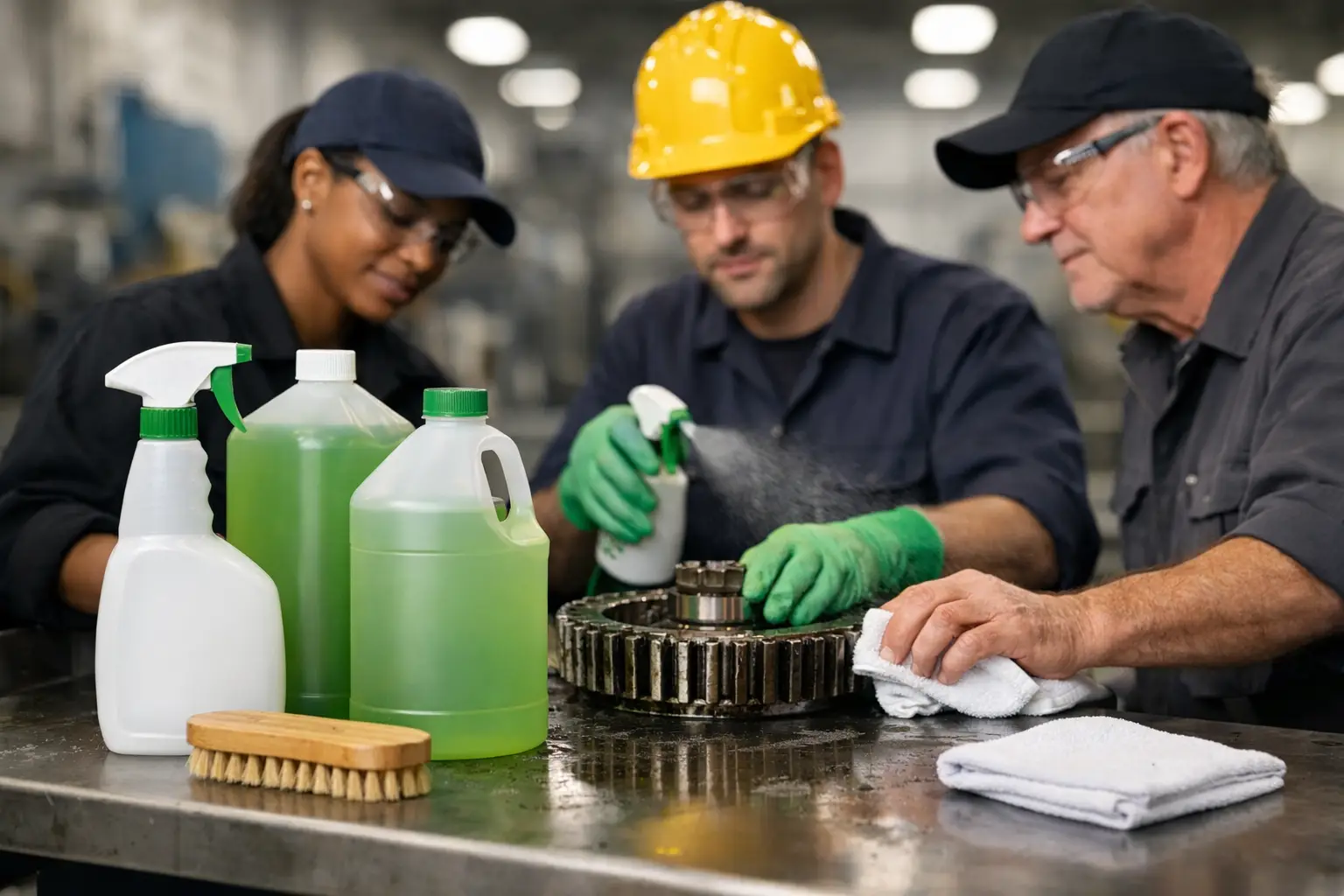
A maintenance crew facing baked-on hydraulic oil, carbonized food residue, or a shop floor coated in lubricants does not need a cleaner that merely sounds safer. They need results that protect uptime, worker safety, and compliance. So, are eco degreasers industrial strength? The answer is yes, when the product is formulated for the soil load, surface, application method, and operating conditions of the facility.
Thank you for reading this post, don't forget to subscribe!The word “eco” is often misunderstood in institutional purchasing. It does not automatically mean weak, nor does industrial strength mean a product must be highly caustic, solvent-heavy, or difficult to handle. A well-engineered eco degreaser can deliver serious cleaning performance through surfactant systems, builders, emulsifiers, and carefully selected solvents that lift and suspend oils so they can be rinsed or wiped away.
For procurement teams and facility managers, the better question is not whether an eco degreaser can work. It is whether its documented performance matches the specific cleaning task.
Are Eco Degreasers Industrial Strength in Real Facilities?
Industrial strength is a performance standard, not a marketing category. In a manufacturing plant, aviation maintenance area, commercial kitchen, healthcare support space, or government facility, a degreaser must remove targeted contaminants consistently without creating a new safety or materials problem.
An eco-conscious formulation can be industrial strength if it handles the expected soil under realistic conditions. That includes heavy petroleum oils, grease films, machining fluids, soot, fingerprints, food fats, adhesives, and traffic-related grime. The formulation must also remain effective at its stated dilution, work within a practical dwell time, and perform across the temperatures and water conditions present at the site.
This is where some assumptions fail. A mild all-purpose cleaner labeled as green may be appropriate for routine wipe-downs, but it may not be suitable for a loading dock, equipment bay, parts-washing operation, or greasy exhaust hood. Conversely, a concentrated industrial degreaser may be more environmentally responsible in actual use because it is diluted correctly, reduces unnecessary chemical handling, and removes soil in fewer passes.
The label alone cannot establish industrial capability. Technical specifications, safety data sheets, dilution instructions, compatibility guidance, and application testing provide a more reliable basis for selection.
What Makes a Degreaser Perform at an Industrial Level?
Degreasing is chemistry and process working together. Oil and grease do not dissolve in water on their own, so an effective degreaser uses ingredients that break the bond between soil and surface, surround the released soil, and keep it from redepositing during removal.
Surfactants are central to that process. They lower surface tension, allowing the solution to wet the contaminated area and penetrate greasy films. Emulsifiers help disperse oils into the cleaning solution, while builders can improve cleaning performance by managing water hardness, supporting alkalinity, or helping loosen stubborn residues.
The strongest product is not always the best product. High-alkaline cleaners can be extremely effective against certain fats and oils, but they may require greater caution around aluminum, painted surfaces, polished metals, sensitive plastics, and worker exposure. Solvent-based products may cut through petroleum soil rapidly, yet they can introduce odor, flammability, ventilation, disposal, or VOC considerations.
Eco degreasers designed for institutional use seek a practical balance. They reduce reliance on unnecessarily harsh ingredients while maintaining enough chemistry to perform on demanding soils. That can mean low-odor formulations, reduced VOC content, biodegradable surfactants, or ingredients selected for a more favorable workplace and environmental profile. The exact claims should always be verified through current product documentation.
The Soil Load Determines the Right Chemistry
A degreaser that succeeds on cafeteria equipment may fail on a fabrication line, not because it is poorly made but because the soil is different. Facility teams should define the contaminant before choosing a product.
Animal and vegetable fats often respond well to alkaline chemistry, especially when warm water and adequate dwell time are available. Petroleum grease, lubricants, hydraulic fluid, and road film may require stronger surfactant action or specialized solvent support. Carbonized deposits may need a more aggressive formula, mechanical agitation, or repeated application. In each case, surface type matters just as much as the soil.
For example, concrete can tolerate cleaning approaches that would be inappropriate for coated flooring, aircraft components, stainless steel, anodized aluminum, or electronic equipment housings. In high-compliance environments, a product should not be approved simply because it cleans well. It must also fit the material, process, ventilation controls, wastewater requirements, and worker protection procedures.
A small test area is often the fastest way to validate a selection. Test the proposed dilution on the actual soil, allow the specified dwell time, use the intended wiping, scrubbing, or pressure-rinsing method, and inspect both cleaning results and surface condition. This approach is more meaningful than comparing labels in isolation.
Dwell Time and Mechanical Action Are Not Optional
Many perceived product failures are process failures. If a degreaser is sprayed and immediately wiped away, it has little opportunity to penetrate and release heavy buildup. If the surface is not agitated where needed, the cleaning team may leave a film behind and assume the formula is inadequate.
Dwell time should be long enough for the chemistry to work but not so long that the product dries on the surface. Agitation with a brush, pad, microfiber tool, or mechanical scrubber can substantially improve removal on textured concrete, tile grout, equipment surfaces, and accumulated grease. Proper rinsing or soil pickup is equally important. Otherwise, emulsified grease can settle back onto the surface.
Water temperature can also affect outcomes. Some soils release more easily with warm water, but a facility should follow the product directions and account for the material being cleaned. Higher temperatures are not automatically better, especially around heat-sensitive surfaces or areas with specific safety restrictions.
Documentation Matters as Much as Cleaning Power
For government, healthcare, aviation, and industrial buyers, performance claims must be supported by documentation. A purchasing decision should include review of the safety data sheet, technical data sheet, dilution requirements, recommended applications, material compatibility, storage conditions, and disposal guidance.
Environmental claims deserve the same scrutiny. Terms such as biodegradable, low VOC, safer, or environmentally preferable may be useful indicators, but they do not all mean the same thing. If a project requires a specific certification, federal preference, facility standard, or customer requirement, verify that the product documentation directly supports it.
This documentation protects more than the purchasing file. It gives environmental services teams, supervisors, and safety personnel clear instructions for training, chemical management, and incident response. It also helps contractors standardize results across shifts and locations.
Veteran Commercial Cleaning supports this type of evaluation by focusing on industrial-grade cleaning solutions alongside the technical and compliance documentation institutional buyers need to make defensible decisions.
When an Eco Degreaser May Not Be the Right Choice
Eco degreasers are not a universal substitute for every specialized cleaner. Certain contaminants, legacy coatings, heavy carbon deposits, and highly regulated maintenance processes may require a product with a different chemistry or a facility-specific cleaning protocol.
The same is true when a degreasing task is actually a disinfection or sanitation task. A degreaser removes oils and soils. It is not automatically a disinfectant, sanitizer, or antimicrobial product. Where pathogen control is required, facilities should complete the cleaning step first and then use an appropriate registered product according to its label directions and required contact time.
There may also be applications where residue control, flash point, corrosion risk, aircraft material requirements, food-contact procedures, or wastewater discharge rules narrow the acceptable options. In those settings, choosing the most aggressive cleaner available is not a sound strategy. Choosing the documented product that fits the process is.
A Practical Standard for Selecting an Eco Degreaser
Before approving a degreaser for routine use, establish what success looks like. Identify the soil, surface, cleaning frequency, equipment, available dwell time, water temperature, worker exposure conditions, and any compliance requirements. Then compare candidate products against those operating realities.
Ask whether the product removes the target soil at a workable dilution, whether it can be safely used on the intended surface, and whether the required documentation is available. Confirm the rinse or wipe-down procedure, especially where residue can affect traction, paint adhesion, equipment operation, or subsequent sanitation.
For small businesses and direct buyers, this same standard applies on a smaller scale. A professional-grade eco degreaser should make the task easier without forcing users to rely on excessive product, repeated applications, or harsh chemistry that is unsuitable for the workspace.
The strongest cleaning program is built on fit, not hype. Select eco degreasers by documented capability, test them under real conditions, and give crews the process guidance needed to turn good chemistry into consistent results.