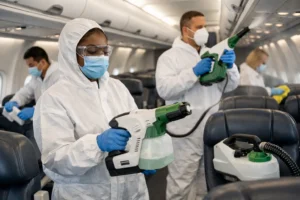
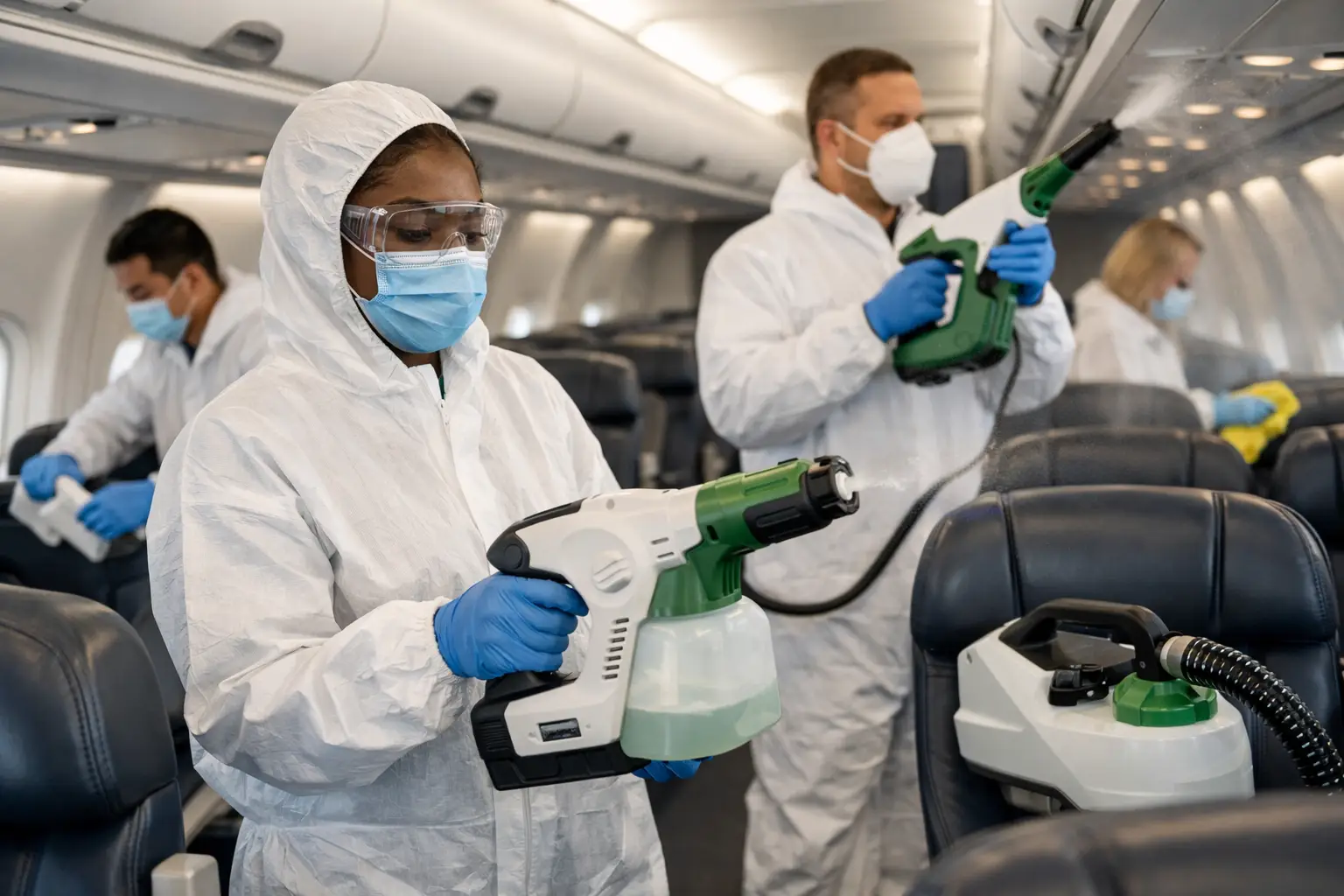
A delayed turnaround can start with something as simple as the wrong disinfectant dwell time on a tray table. In aviation, cleaning errors do not stay small for long. They affect aircraft availability, passenger confidence, worker safety, and audit readiness. That is why an aviation disinfection standards guide needs to do more than list chemicals. It needs to connect product choice, procedure, documentation, and operational control.
Thank you for reading this post, don't forget to subscribe!What an aviation disinfection standards guide should actually cover
Aviation environments are not cleaned like standard office space, and they should not be managed like retail janitorial programs. Aircraft interiors, jet bridges, terminals, lounges, baggage areas, maintenance spaces, and ground support equipment all present different risks. Some are passenger-facing. Others are maintenance-critical. Each one brings its own material compatibility concerns, traffic patterns, and regulatory expectations.
A useful aviation disinfection standards guide starts with that distinction. Disinfection in a terminal restroom is not the same as disinfection on cockpit touch surfaces or in a galley area. The standard is never just whether a product kills pathogens in a lab. The real question is whether it can be used correctly, repeatedly, and safely in an operating aviation environment without creating corrosion, residue, odor issues, slip hazards, or documentation gaps.
For procurement teams and facilities leaders, that means looking at standards through four lenses at the same time: efficacy, material safety, worker protection, and recordkeeping. Miss one, and the program becomes harder to defend during review.
Compliance in aviation is layered, not one-size-fits-all
One of the most common mistakes in aviation sanitation planning is assuming there is a single master rulebook. In practice, compliance is layered. Federal public health expectations, workplace safety requirements, airline or airport operating procedures, manufacturer guidance, and internal quality systems all overlap.
Disinfectants used in aviation settings typically need to be evaluated for EPA registration and label claims, OSHA hazard communication requirements, SDS availability, and suitability for the surfaces involved. In aircraft-related applications, teams also need to consider whether product use aligns with OEM guidance or approved maintenance practices. A disinfectant that is highly effective on paper can still be the wrong choice if it degrades plastics, damages coatings, or leaves films on sensitive surfaces.
This is where disciplined procurement matters. Buyers should expect technical data sheets, safety documentation, and clear use instructions that match the intended environment. If a supplier cannot support the paperwork, that is not a minor issue. In aviation, incomplete documentation slows approvals and creates avoidable risk during inspections, incident reviews, or contract evaluations.
The difference between cleaning and disinfection matters
Teams often use the words interchangeably, but operationally they are different steps. Cleaning removes soils, oils, and visible contamination. Disinfection reduces or inactivates targeted microorganisms when used according to the label. If surfaces are not cleaned first when required, the disinfectant may not perform as intended.
That distinction matters on high-touch aviation surfaces. Armrests, lavatory touchpoints, security bins, gate seating, check-in kiosks, and breakroom counters accumulate both organic soil and heavy contact frequency. A disinfection program that skips soil removal can look compliant while underperforming in practice.
Chemical selection is a performance decision and a risk decision
Aviation buyers should be cautious about choosing products based only on kill claims or broad marketing language. The right disinfectant has to work within actual operating limits. That includes required dwell time, dilution control, ventilation considerations, residue profile, odor, compatibility with repeated use, and training burden for the frontline crew.
Fast contact time may be valuable in a quick-turn environment, but only if the product remains wet long enough to meet its claim. Low-residue chemistry can support passenger-facing surfaces, but that benefit needs to be balanced against the type of contamination being addressed. Safer, environmentally responsible formulations can reduce worker exposure concerns and support broader sustainability goals, but they still need to meet institutional performance expectations.
There is no perfect chemistry for every aviation application. It depends on the environment. A terminal common area may allow one approach. An aircraft interior or maintenance support area may require another. The best programs do not force one product across every use case. They standardize where possible and specialize where necessary.
Surface compatibility is not a footnote
In aviation, material damage is expensive and sometimes operationally significant. Repeated exposure to an incompatible disinfectant can discolor plastics, weaken seals, haze transparent surfaces, affect electronics housings, or contribute to corrosion concerns over time. That makes compatibility review part of the sanitation standard, not an optional extra.
This is especially relevant when contractors or internal teams try to simplify inventory by using a single aggressive product everywhere. That may reduce shelf complexity, but it can increase long-term maintenance risk. A better approach is to align approved chemistry with specific surface categories and train crews accordingly.
Procedure control matters more than product claims alone
Even the best disinfectant fails if the process around it is weak. Aviation sanitation programs need clear procedural control. That includes defined frequencies, area assignments, application methods, pre-cleaning rules, dwell time expectations, and post-application checks. It also includes practical staffing decisions. A process that works during normal volume may break down during irregular operations, weather disruptions, or peak travel periods.
Facilities managers should ask a simple question: can the team execute this standard consistently on a bad day, not just on a good one? If the answer is no, the standard may be too fragile for aviation operations.
Training is part of that control. Workers need to understand why certain surfaces require specific products, what PPE is needed, how to interpret labels, and how to avoid cross-contamination. Supervisors need a way to verify compliance without creating paperwork no one uses. The strongest programs are straightforward enough to follow and documented enough to defend.
Documentation is part of the disinfection standard
In regulated and high-visibility environments, undocumented compliance is weak compliance. Aviation operators, service contractors, and public-facing facilities need records that show what was used, where it was used, whether staff were trained, and what supporting technical documents are on file.
That does not mean creating bureaucracy for its own sake. It means building a record trail that supports operations, safety, and procurement. At minimum, decision-makers should maintain current SDS sheets, technical specifications, use instructions, staff training records, and area-based cleaning protocols. Depending on the contract environment, they may also need inspection logs, incident response documentation, and supplier certifications.
For procurement officers, this point is often underestimated during sourcing. A lower-friction supplier is not just one with available inventory. It is one with clean documentation, responsive support, and products that can move through internal review without repeated follow-up.
Common failure points in aviation disinfection programs
Most program breakdowns are not dramatic. They are procedural. A product is approved but used on the wrong surface. A crew shortens dwell time to meet turnaround pressure. Labels are available, but training is inconsistent across shifts. A terminal program works well in public areas but ignores back-of-house touchpoints where contamination transfer still occurs.
Another common problem is overcorrection. After a public health event or inspection concern, some operations increase chemical intensity without reassessing compatibility, ventilation, or workflow. That can create new issues, including employee complaints, residue buildup, or unnecessary exposure concerns. Strong standards are measured, not reactive.
How to evaluate a supplier against aviation requirements
For aviation and institutional buyers, supplier review should focus on readiness, not just product availability. Can the supplier provide complete technical documentation? Do they understand compliance-driven environments? Can they support standardization across multiple facilities or contractor teams? Are their formulations aligned with both performance needs and safer use expectations?
This is where a disciplined, procurement-oriented supplier can add value beyond the container label. Veteran Commercial Cleaning, for example, is positioned around high-compliance environments where documentation, safety alignment, and operational reliability are part of the purchase decision, not afterthoughts.
Building a standard that holds up in real operations
The most effective aviation disinfection standards are practical. They recognize that terminals, aircraft support spaces, and passenger touchpoints move fast. They also recognize that audits, worker safety reviews, and public scrutiny are not going away. The answer is not to write a more complicated standard. It is to write one that frontline teams can follow, supervisors can verify, and procurement can support with the right documentation.
If you are reviewing your current program, start with the basics. Confirm that cleaning and disinfection steps are clearly separated where needed. Match chemistry to surfaces and operating conditions. Verify that SDS sheets, technical documents, and training records are current. Then pressure-test the program against actual turnaround conditions, not ideal ones.
Aviation sanitation is not won by slogans or overbuilt checklists. It is won by repeatable execution, compliant chemistry, and documentation that stands up when someone asks for proof. That is the standard worth building.