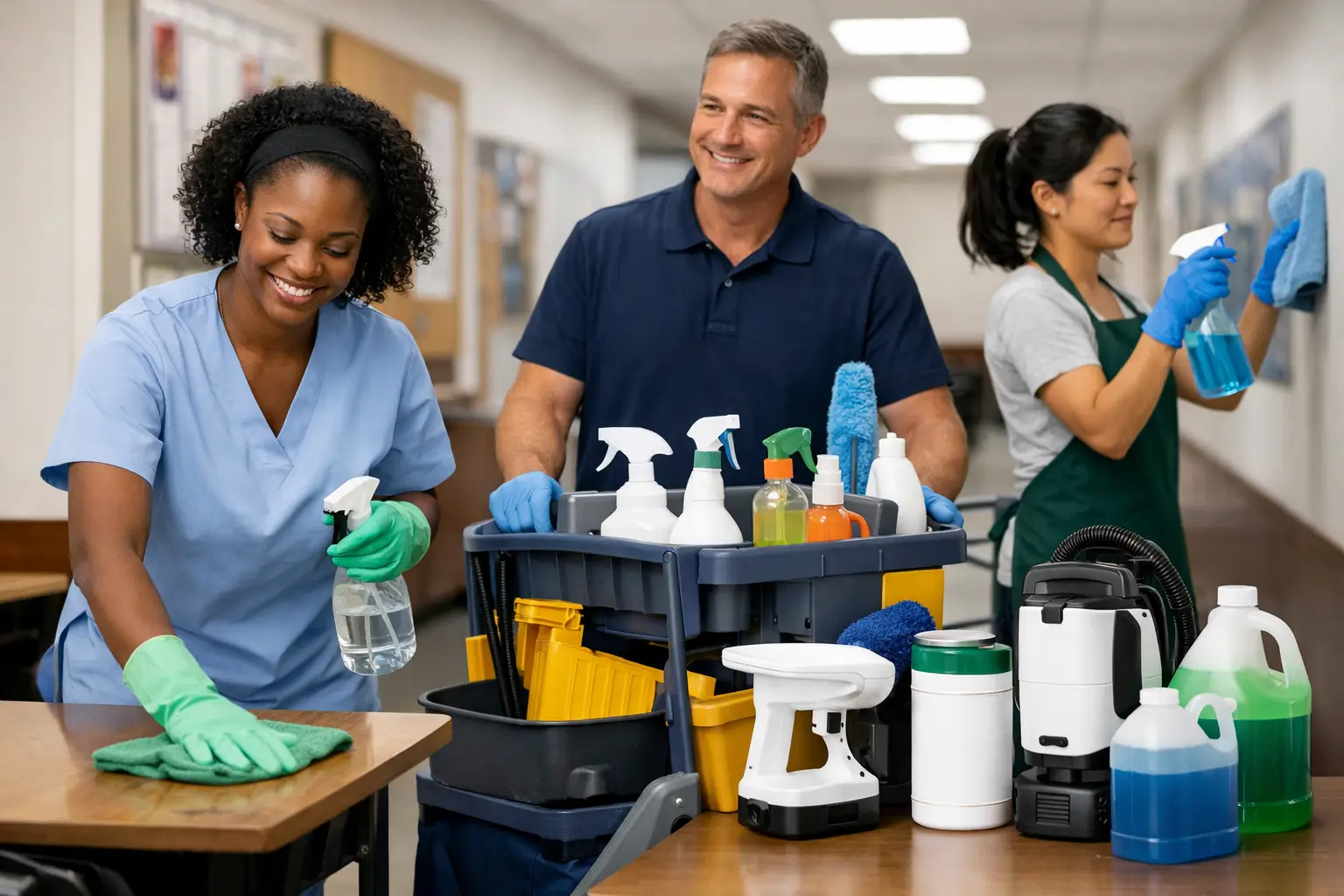
A school custodian may have only minutes between breakfast service, a restroom rush, and the first bell. In that window, the best cleaning products for schools are not simply the strongest chemicals on the shelf. They are the products that match the surface, the soil load, the required sanitation outcome, and the facility’s safety procedures.
Thank you for reading this post, don't forget to subscribe!For facilities managers, purchasing teams, and operations leaders, product selection affects far more than appearance. The wrong chemistry can damage floors, leave residue on desks, create avoidable worker exposure, or fail to meet disinfection requirements. The right program supports healthy learning environments while giving staff clear, repeatable procedures they can execute every day.
What Schools Need From Their Cleaning Products
Schools are complex facilities. A single campus may include classrooms, cafeterias, gyms, administrative offices, nurse stations, restrooms, locker rooms, buses, maintenance areas, and outdoor common spaces. Each area brings different soils, traffic patterns, and regulatory considerations.
A successful product program begins by separating cleaning from disinfecting. Cleaning removes visible dirt, food soils, oils, and other debris from a surface. Disinfecting uses an appropriate registered product to address designated pathogens when used exactly as the label directs. A disinfectant applied to a visibly soiled desk or restroom fixture may not perform as intended. In many cases, pre-cleaning is part of the required process.
Schools also need products that staff can use consistently. Concentrated products can reduce packaging and storage demands, but they require controlled dilution, proper training, and dispensing equipment. Ready-to-use products simplify application and reduce mixing errors, but may be less efficient for high-volume areas. The right choice depends on staffing, storage capacity, usage volume, and the controls already in place.
Best Cleaning Products for Schools by Facility Need
Rather than searching for one universal cleaner, build a controlled set of products around the work that actually occurs on campus. Most schools need four core categories.
- Neutral all-purpose cleaners handle routine soils on desks, counters, painted walls, partitions, doors, and other hard surfaces. A low-residue formulation is particularly useful where frequent cleaning is required and appearance matters.
- EPA-registered disinfectants and sanitizers support targeted infection-control procedures in restrooms, nurse areas, high-touch points, cafeterias, and other designated spaces. Selection should be based on label-approved uses, surface compatibility, required contact time, and the facility’s written protocols.
- Restroom cleaners address mineral deposits, soap scum, body oils, and odor sources on toilets, urinals, sinks, tile, and fixtures. The product should be effective without unnecessarily aggressive chemistry that could harm finishes or create excess exposure concerns.
- Floor care products should align with the campus flooring inventory. Entryways, vinyl composition tile, sealed concrete, athletic flooring, carpet, and gym surfaces each require different methods. An all-purpose cleaner is rarely the right answer for every floor.
Other products may be necessary for specific spaces. Commercial kitchens may require food-service appropriate degreasers and sanitation procedures. Maintenance departments may need industrial degreasers for equipment rooms or vehicle areas. Athletic departments may need products suited to locker rooms and high-moisture environments. These should be added deliberately, not substituted casually into a general custodial program.
Disinfectants: Compliance Depends on Use, Not the Label Alone
A disinfectant is only as effective as the process used around it. Facility teams should verify the product’s EPA registration, approved use sites, dilution instructions, contact time, personal protective equipment requirements, and surface limitations. If a label requires a surface to remain visibly wet for a stated period, a quick spray-and-wipe process does not meet the instruction.
This is where operational discipline matters. Color-coded microfiber, clearly labeled spray bottles, dispensing controls, and documented training help prevent cross-contamination and misuse. Disinfectants should not be treated as a replacement for routine cleaning. They are a controlled tool within a broader sanitation program.
Floor Care: Protect a Major Asset
Floors carry the visual burden of a school’s cleanliness, but they also carry safety and budget consequences. Excessive water, incompatible chemicals, or improper dilution can weaken finishes, leave slippery residue, and shorten the life of flooring materials.
For daily work, select a cleaner that removes tracked-in soil without dulling the finish or creating buildup. For periodic restoration, use products and procedures compatible with the existing floor system. Gym floors deserve particular care because harsh cleaners and excessive moisture can affect coatings, traction, and appearance. A product decision that seems minor at purchase can become costly when it contributes to premature refinishing or replacement.
Prioritize Safer Chemistry Without Compromising Performance
School cleaning teams work around students, staff, visitors, and often sensitive populations. That makes safer chemistry a practical operational requirement, not a cosmetic preference. Products with lower odor, reduced harshness, and thoughtful ingredient profiles can improve the cleaning experience when they still meet the performance standard required for the task.
However, “green” should not be used as a shortcut for evaluation. Procurement teams should review technical data, intended use, dilution requirements, and relevant environmental certifications where applicable. They should also consider whether a product’s performance claims are appropriate for the facility’s needs. A mild general cleaner may be an excellent choice for daily classroom use but unsuitable for a heavily soiled maintenance area.
The strongest product is not automatically the best product. Effective school programs use the least aggressive chemistry that can reliably accomplish the assigned task. That approach supports occupant comfort, material compatibility, worker safety, and responsible environmental practices.
Documentation Should Be Part of the Purchase Decision
A cleaning product should arrive with more than a label. Schools and districts need documentation that supports safe handling, training, purchasing review, and incident response. At minimum, maintain current Safety Data Sheets, technical specifications, dilution instructions, and manufacturer guidance for every chemical in use.
For larger districts and public-sector buyers, procurement readiness may also include product certifications, compliance statements, batch or lot tracking where relevant, and clear vendor documentation. These records support internal audits and help facilities respond quickly when an administrator, parent, inspector, or environmental health team asks what is being used in a specific area.
Documentation also makes transitions easier. When staffing changes or campuses consolidate supply rooms, written product standards reduce guesswork. Teams know which cleaner belongs in classrooms, which disinfectant is approved for high-touch surfaces, and which floor product is compatible with a particular finish.
Build a School Cleaning Program Around Zones
A product list becomes far more effective when it is assigned by zone. Classrooms need routine removal of dust, fingerprints, food residue, and high-touch soils. Restrooms require frequent cleaning and targeted disinfection based on traffic and established procedures. Cafeterias need a clear distinction between food-contact sanitation needs and general floor or surface cleaning.
Entrances and hallways require soil control because grit and moisture spread quickly through a building. Nurse offices, isolation spaces, and health-related areas should follow heightened protocols directed by school health leadership and applicable requirements. Maintenance shops and transportation areas should use industrial products only where their soil conditions and surface types justify them.
This zone-based approach also reduces chemical clutter. Instead of storing multiple overlapping products in every closet, schools can standardize a controlled core assortment and provide specialized chemistry only where it is needed. Fewer unnecessary products means simpler training, lower risk of incompatible mixing, and more consistent results.
Questions to Ask Before Approving a Product
Before adding a cleaner, disinfectant, wipe, or degreaser to a school purchasing catalog, ask whether it is suitable for the intended surface and soil type. Confirm how it will be dispensed, stored, labeled, and used by frontline staff. Review whether the product requires gloves, eyewear, ventilation, or a specific contact time. Finally, determine whether the supplier can provide the documentation needed for your facility’s compliance and purchasing requirements.
These questions are especially valuable when a product appears to solve several problems at once. Multi-purpose claims can be useful, but they do not eliminate the need to verify compatibility and instructions. A product that performs well in one environment may be a poor fit for another.
Veteran Commercial Cleaning approaches institutional supply decisions with that same discipline: performance first, supported by safer chemistry, dependable documentation, and procedures teams can follow under real operating conditions.
A clean school is not created by a single product or an occasional deep clean. It is built through daily consistency: the right chemistry in the right hands, used according to a standard that protects students, staff, surfaces, and the people responsible for keeping the campus ready to learn.