A disinfectant wipe that leaves a pleasant scent but cannot support its label claim is not a sustainable choice for a critical facility. It creates repeat labor, uncertain infection-control outcomes, and unnecessary waste. This eco friendly disinfectant wipes review focuses on the decision factors that matter in healthcare, manufacturing, government, aviation, and commercial operations: verified disinfection, worker safety, documentation, and practical use at scale.
Thank you for reading this post, don't forget to subscribe!The central question is not whether a wipe is labeled green. It is whether the product can meet the facility’s required pathogen claims and contact time while reducing avoidable chemical hazards or environmental burdens. Those goals can align, but buyers should not assume that they always do.
What “Eco Friendly” Should Mean for Disinfectant Wipes
For institutional buyers, eco-friendly chemistry is a performance and risk-management issue, not a marketing category. A responsible wipe may use an active ingredient profile designed to reduce harsh fumes, residue, or corrosivity compared with traditional alternatives. It may also carry third-party environmental certifications, use thoughtfully selected substrate materials, or support more efficient application with less product waste.
None of those features replaces a disinfectant registration or a clear label. In the United States, disinfectants used to make public-health claims must be registered with the Environmental Protection Agency. The label is the operating instruction. It identifies the organisms covered, the surfaces approved for use, dilution or use directions where applicable, required personal protective equipment, and the contact time needed for disinfection.
That distinction matters in high-compliance settings. A biodegradable wipe substrate does not make a product appropriate for a patient-care area, an aircraft cabin turnaround, or a production environment. Conversely, a wipe with credible antimicrobial performance may still be a poor environmental fit if it produces excessive packaging waste, contains unnecessarily aggressive chemistry, or creates ventilation and worker-exposure concerns.
Eco Friendly Disinfectant Wipes Review: The Core Test
A useful review begins with the facility’s actual risk profile. Procurement teams should assess wipes against the surfaces, contamination risks, workflow, and documentation requirements of the site – not against broad consumer promises.
1. Confirm the disinfection claim before evaluating the green claim
Start with the EPA registration number and the product label. Verify that the claimed organisms match the facility’s exposure concerns and that the wipe is approved for the materials in use. Healthcare and public-facing facilities may require particular viral, bacterial, or fungal claims. Manufacturing operations may prioritize sanitation around shared touchpoints while also protecting coatings, controls, and sensitive equipment.
Pay close attention to contact time. A product can only disinfect when the treated surface remains visibly wet for the full label-specified period. If a wipe dries too quickly on large surfaces, or if staff use one wipe beyond its practical coverage area, the claimed result may not be achieved. This is one of the most common gaps between product selection and field performance.
2. Evaluate chemistry through an operational lens
Lower-odor or less-corrosive chemistry can improve the working environment, particularly in enclosed spaces, high-frequency cleaning programs, and facilities with sensitive occupants. It can also reduce the chance of finish damage, discoloration, or equipment corrosion. But “safer” does not mean no precautions are required.
Review the Safety Data Sheet alongside the technical data sheet. Look for required PPE, first-aid measures, storage conditions, incompatibilities, and any warnings relevant to ventilation or repeated occupational exposure. A facilities manager should be able to translate that information into workable standard operating procedures without relying on guesswork.
The right balance depends on the application. A low-residue wipe that supports frequent use on desks, touchscreens, and common-area surfaces may be a strong operational choice. For a higher-risk event or a more demanding pathogen requirement, the facility may need a different approved disinfectant protocol. One product is rarely the answer for every room and every surface.
3. Consider the wipe material and waste stream honestly
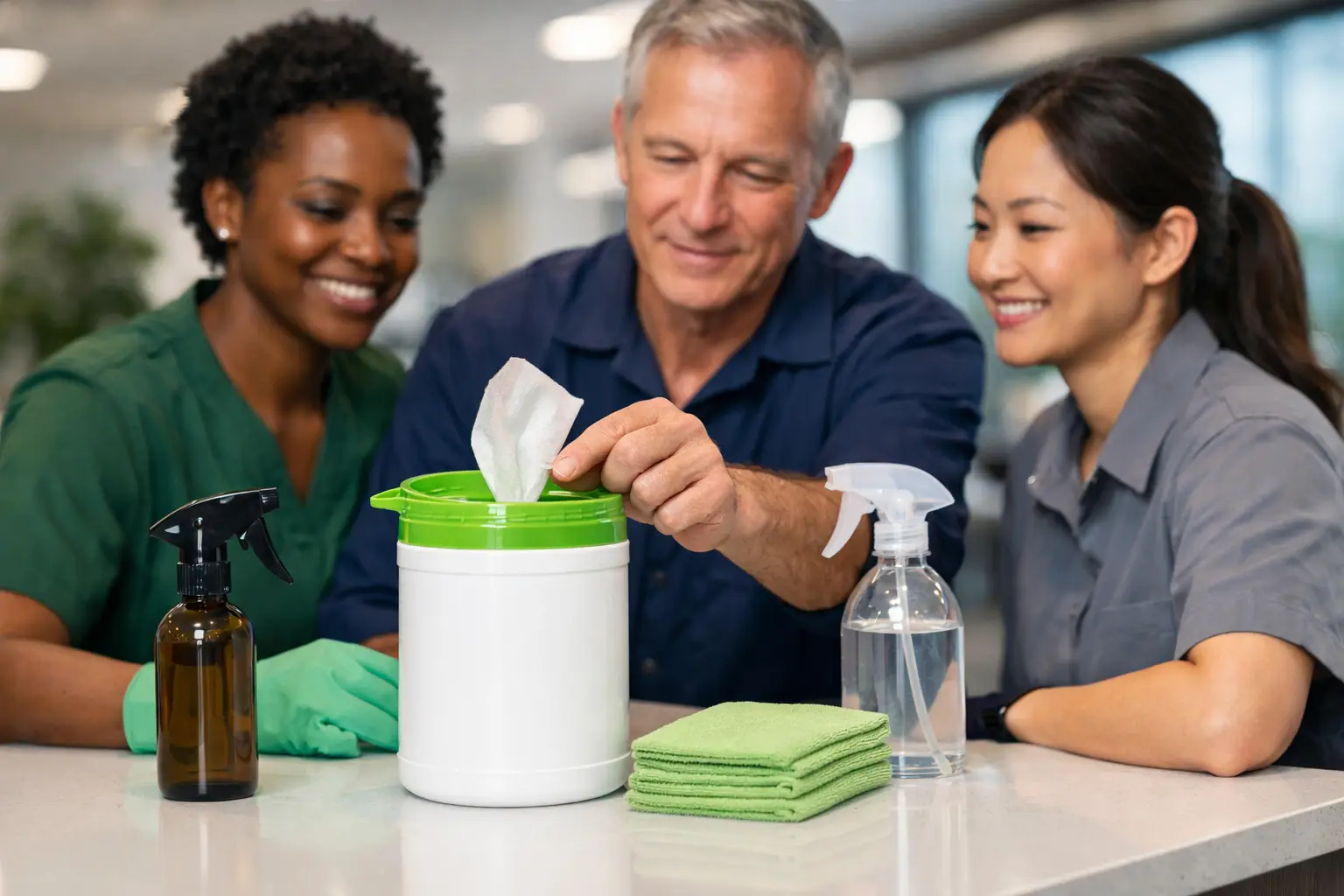
Pre-moistened wipes bring clear advantages: controlled application, portability, fewer mixing errors, and faster response for high-touch surfaces. They also create a single-use waste stream. A credible environmental review should acknowledge both sides.
Ask whether the substrate is durable enough to complete its intended task without tearing or shedding. Assess canister, refill, and packaging options where available, along with local disposal rules. Do not make assumptions about flushability or compostability. Disinfectant wipes generally belong in the appropriate solid-waste stream unless the manufacturer and local authority explicitly state otherwise.
Waste reduction often comes from better process discipline rather than a label alone. Training staff to use the correct number of wipes per surface, close containers to prevent dry-out, and avoid using disinfectant wipes where routine cleaning is sufficient can reduce consumption without compromising sanitation.
4. Check surface compatibility and residue control
A wipe is only sustainable if it helps preserve the assets being cleaned. Replacing damaged displays, finishes, seating materials, coated metals, or control panels carries environmental and financial costs that a greener ingredient list cannot offset.
Before deployment, verify compatibility with the facility’s high-value materials. This is particularly important for aviation interiors, healthcare equipment, painted surfaces, stainless steel, electronics, and manufacturing controls. When documentation is unclear, conduct a controlled test in accordance with site procedures and manufacturer guidance. Watch for streaking, haze, tackiness, color change, coating damage, and residue buildup.
Residue matters beyond appearance. In a production setting, it can interfere with quality requirements. In public-facing spaces, it can make a cleaned surface look neglected. A product that performs well in a small trial but leaves persistent residue during repeated use may add labor to the cleaning program.
Documentation Is Part of Product Performance
For government, military, healthcare, and regulated commercial buyers, a wipe review is incomplete without a documentation review. The product file should be easy to maintain and easy to produce during an audit, contract review, safety inquiry, or incident investigation.
At a minimum, the team should retain the current label, EPA registration information, Safety Data Sheet, technical data sheet, and any applicable environmental certifications or manufacturer declarations. Confirm that lot tracking, shelf life, storage requirements, and ordering specifications fit the facility’s inventory controls. If a claim is material to the purchase decision, it should be documented rather than inferred from package language.
This is where a procurement-ready supplier adds value. Veteran Commercial Cleaning supports buyers who need professional cleaning products evaluated through performance, safety, and compliance requirements rather than consumer-style product comparisons.
Field Testing Before a Full Rollout
A short, structured pilot can reveal issues that product literature cannot. Select representative spaces, shifts, and users. Include the workers who will actually handle the canisters, clean surfaces, and manage replenishment. Their feedback should address whether the wipes dispense reliably, stay wet through the required contact time, clean without smearing, and fit the established workflow.
Use the pilot to validate training language as well. Staff need a simple distinction between cleaning and disinfecting: remove visible soil first when the label requires it, apply the wipe thoroughly, and allow the surface to remain wet for the stated contact time. The best product cannot correct inconsistent technique.
Measure practical outcomes such as wipe consumption, damaged materials, odor complaints, missed high-touch areas, and time required per task. These operational measures often provide a clearer picture of sustainability than a single environmental claim.
The Better Buying Standard
Eco-friendly disinfectant wipes deserve consideration when they reduce unnecessary chemical harshness and environmental burden without weakening verified sanitation performance. The strongest options make compliance easier: their labels are clear, their documentation is current, their material compatibility is credible, and their use instructions can be followed under real working conditions.
For critical facilities, the disciplined choice is not the wipe with the most appealing green language. It is the one that protects people, supports the sanitation plan, respects facility assets, and gives the team evidence they can stand behind when it matters.