A degreaser that cuts through carbonized oil on a shop floor can fail badly in a healthcare loading dock, and a formula that looks strong on paper can create avoidable safety or surface-compatibility problems in daily use. That is why an industrial degreaser product review should focus on fit for facility conditions, not just how aggressive a product sounds.
Thank you for reading this post, don't forget to subscribe!For procurement teams, facilities managers, and operations leaders, the real question is not whether a degreaser works. Most do, under the right conditions. The question is whether it works consistently across your soils, your surfaces, your labor model, and your compliance requirements without introducing unnecessary risk.
What matters in an industrial degreaser product review
In institutional and industrial environments, grease is rarely just grease. It may be petroleum residue on manufacturing equipment, food-based buildup in service areas, hydraulic fluid in maintenance bays, or layered soil mixed with dust, carbon, and metal fines. That distinction matters because the right product for one type of contamination may underperform or leave residue in another.
A useful review starts with soil profile. Heavy petroleum and baked-on residues usually require stronger solvency and longer dwell time. Lighter maintenance cleaning may be better served by a safer, lower-odor formula that teams can use more frequently without disrupting operations. Buyers who skip this step often end up overbuying chemical strength and underbuying usability.
Surface compatibility is just as important. Floors, painted equipment, stainless steel, aluminum, composites, plastics, and rubber components can all respond differently to the same chemistry. A product that removes grease quickly but dulls finishes, softens seals, or creates slip concerns is not a strong operational choice. In regulated facilities, that trade-off is usually unacceptable.
Performance should be measured in use, not claims
Many degreasers promise fast penetration, heavy-duty cleaning, or industrial strength performance. Those phrases are not meaningless, but they are not enough for a disciplined evaluation. In practice, performance comes down to how the product behaves in your environment with your staff, tools, and cleaning frequency.
Dwell time is one of the first practical indicators. If a degreaser requires extended soaking to break down common soils, it may be effective but inefficient for fast-moving maintenance teams. On the other hand, a product that acts quickly but requires extensive rinsing may create workflow issues in spaces where water use must be controlled.
Foaming behavior also matters more than many buyers expect. High-foam products can be useful for vertical cling and targeted cleaning, but they may slow rinse-out in production areas or around sensitive equipment. Low-foam formulas may support machine-based cleaning or easier recovery, especially in larger facilities. Neither is automatically better. The right choice depends on the application.
Residue is another separator between average and dependable products. A degreaser that leaves a film may attract fresh soil, interfere with coatings, or create rework. That is especially relevant in manufacturing, transportation, and government environments where cleaned surfaces may move directly into inspection, maintenance, or operational use.
Safety and compliance are not side issues
A credible industrial degreaser product review has to account for worker exposure, documentation, and facility standards. In high-compliance settings, cleaning chemistry is part of operational risk management.
Start with SDS review and technical documentation. Buyers should be able to confirm handling requirements, dilution guidance, PPE expectations, storage considerations, and first-aid information without ambiguity. If documentation is hard to obtain or unclear, that is a procurement concern, not a paperwork inconvenience.
Odor profile and ventilation needs deserve real attention. A degreaser may perform well in open industrial bays but create problems in enclosed maintenance rooms, occupied commercial buildings, or mixed-use facilities. Stronger smell is not proof of better cleaning. In many cases, it simply reflects a harsher user experience and stricter ventilation demands.
There is also the issue of environmental responsibility. Many organizations now need chemistry that aligns with safer-use standards while still delivering institutional results. That does not mean every eco-conscious degreaser is equal, and it does not mean every traditional solvent-based product should be ruled out. It means buyers should weigh whether the formula achieves the required outcome with the least operational burden and the lowest reasonable safety impact.
Industrial degreaser product review by use case
The most effective way to compare degreasers is by application, not by label language alone.
In manufacturing plants, degreasers often need to remove lubricant buildup, machine oils, and layered residue from equipment exteriors, floors, and support areas. Here, cleaning power and material compatibility need to stay balanced. An overly harsh product may cut grease fast but shorten equipment life or increase hazard communication burdens for staff.
In aviation and transportation support environments, residue can include fuel-related soils, hydraulic contamination, carbon deposits, and heavy ramp grime. Products used in these settings should be evaluated with particular attention to surface sensitivity, documentation, and consistency across maintenance workflows. A formula that works in a general shop may not be the right fit around specialized components or mixed-material surfaces.
In healthcare and adjacent service areas, degreasing often happens in maintenance zones, loading docks, utility spaces, and other back-of-house environments rather than patient-facing rooms. Even so, odor control, safer handling, and clear documentation are still important. Products that leave persistent fumes or heavy residue can create unnecessary friction for environmental services and facility teams.
In government and military facilities, procurement readiness is often part of product suitability. Reliable technical documentation, standardized performance, and supplier discipline matter because purchasing is tied to accountability. A good product with weak documentation support can still be the wrong procurement decision.
What buyers often miss during evaluation
One common mistake is testing a degreaser only at full strength. That can make almost any serious product look effective in a short trial. The more useful question is how well it performs at the dilution ratios your team will actually use. If the product becomes inconsistent with slight variation in mix or application, field reliability may suffer.
Another issue is labor dependence. Some degreasers clean well only when paired with aggressive scrubbing, repeated passes, or very specific dwell timing. That may be acceptable in scheduled deep cleaning but not for routine maintenance. Buyers should look for products that fit the reality of staffing, training, and turnover.
Rinse requirements are also easy to underestimate. In facilities with drains, washdown procedures, or dedicated maintenance bays, a rinse-heavy product may be workable. In controlled indoor environments, around electronics, or on surfaces where moisture needs to stay limited, easier wipe-off performance may be the better operational fit.
It is also worth watching for over-specialization. A highly targeted degreaser can be excellent for one task and inefficient for broader facility use. For some organizations, a narrower product lineup is better for training, storage, and inventory control. For others, application-specific chemistry is the smarter route. It depends on site complexity and how centralized your cleaning program is.
How to judge a supplier, not just the chemistry
In a serious review, product performance and supplier reliability should be evaluated together. Facilities operating under compliance pressure do not just need a degreaser. They need dependable access to product data, consistent fulfillment, and support that fits institutional purchasing.
That is especially true for multi-site organizations, public sector buyers, and contract-driven environments. If a supplier cannot support documentation requests, technical questions, or procurement workflows, the burden shifts back to your internal team. That hidden cost shows up in delays, substitutions, retraining, and audit exposure.
Veteran Commercial Cleaning operates in this space with a focus on institutional-grade cleaning products and procurement-ready support, which is often as important to buyers as the chemistry itself. For teams managing demanding facilities, that combination of performance, documentation, and operational discipline is what makes a product review meaningful instead of theoretical.
A practical standard for choosing the right degreaser
The best degreaser is rarely the most aggressive one. It is the product that removes the target soil within your required cleaning window, protects the surfaces involved, aligns with worker-safety expectations, and arrives with the documentation your facility needs to operate confidently.
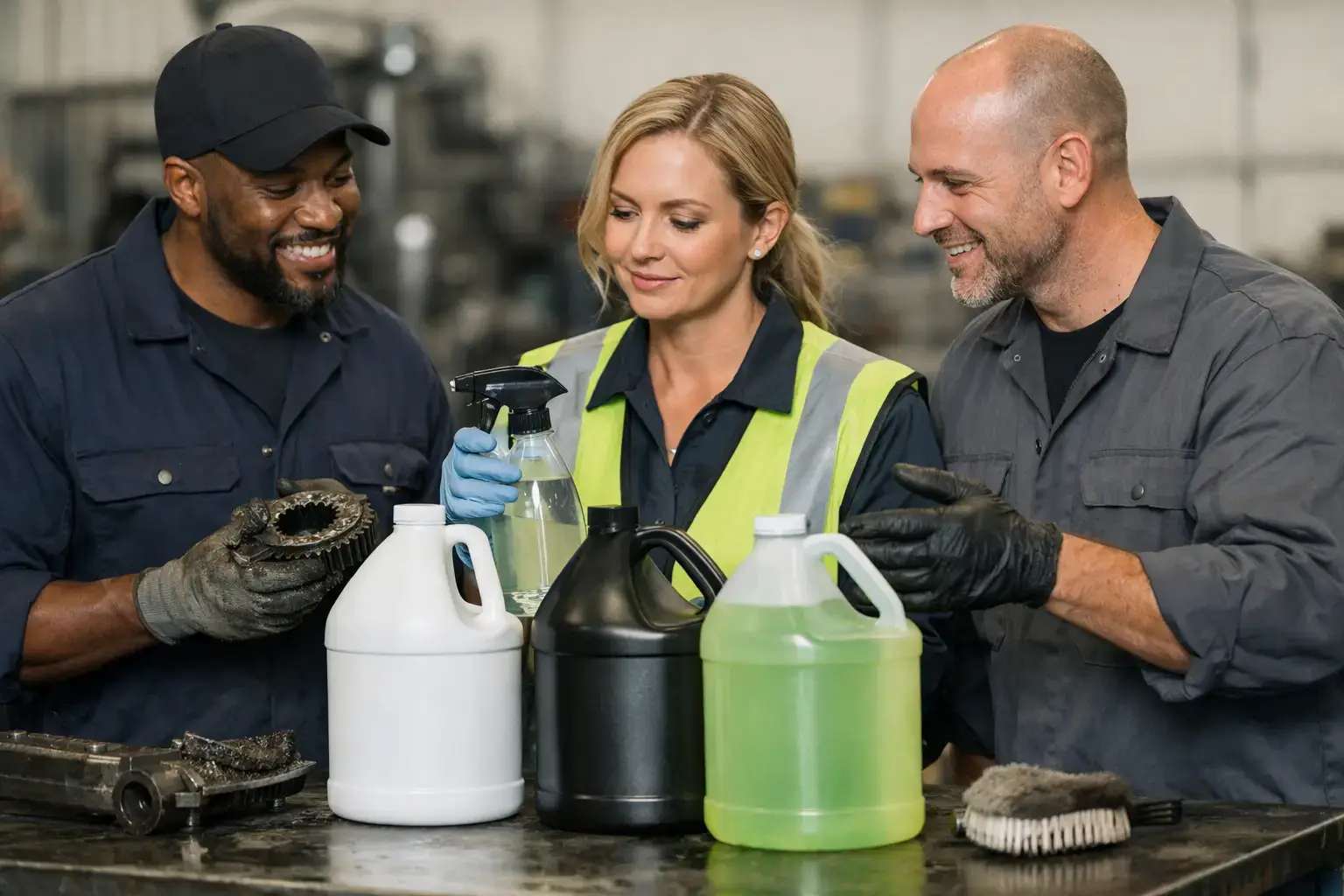
If you are comparing options, test them against real soils, on real surfaces, with the actual tools and staff who will use them. Review the SDS, check for residue, watch the rinse burden, and pay attention to whether the product supports routine execution instead of just impressive first-use results.
When a degreaser fits the workflow, the safety program, and the compliance environment, it stops being just another chemical on the shelf. It becomes part of a cleaning system your team can trust under pressure.