A grease-stained production floor is not merely a housekeeping issue. Oil residue can create slip hazards, interfere with equipment inspections, contaminate work areas, and make a facility appear out of control during an audit. Industrial degreasers are a core part of managing those risks, but selecting one should involve more than choosing the strongest formula available.
Thank you for reading this post, don't forget to subscribe!For manufacturing plants, aviation operations, healthcare support areas, government facilities, and maintenance departments, the right degreasing program must balance cleaning power with worker safety, material compatibility, wastewater considerations, and documentation. A product that cuts through heavy petroleum soil may be appropriate for a machine shop but unsuitable for sensitive surfaces, occupied areas, or facilities with strict environmental controls.
What Industrial Degreasers Are Designed to Do
Industrial degreasers are formulated to loosen, lift, emulsify, or dissolve oils, lubricants, grease, carbon deposits, and similar soils that ordinary general-purpose cleaners may leave behind. They are used on floors, machinery exteriors, tools, maintenance bays, parts, exhaust areas, food-service support equipment, and other high-soil environments.
The chemistry matters because grease is not a single contaminant. Hydraulic fluid, cutting oil, mineral oil, animal fat, polymerized cooking residue, ink, adhesive residue, and shop grime respond differently to cleaning agents. A successful product and process match the soil type, the surface, the application method, and the required dwell time.
This is why stronger is not automatically better. Highly aggressive chemistry can damage paint, aluminum, rubber, plastics, floor finishes, seals, and sensitive equipment. It can also increase PPE requirements, ventilation needs, training demands, and disposal complexity. In a critical facility, the best degreaser is the one that removes the required soil predictably without creating a new operational problem.
Start With the Soil, Surface, and Cleaning Task
A practical evaluation begins at the point of use. Facilities teams should identify what is being removed, where it is located, and what is underneath it. This basic discipline prevents common failures such as using a floor degreaser on a delicate component or applying an undiluted product where a controlled dilution would perform effectively.
Identify the soil load
Light maintenance soils may respond to a neutral or mildly alkaline cleaner used routinely. Heavy buildup on production equipment, loading docks, maintenance areas, and kitchen support spaces may require a higher-performance degreaser with longer dwell time, agitation, or hot-water application.
Age also changes the job. Fresh oil is generally easier to lift than baked-on residue or grease combined with dust, metal fines, and traffic soil. For hardened deposits, mechanical action such as brushing, pads, pressure washing, or automated floor equipment may matter as much as chemical strength.
Confirm surface compatibility
Concrete, sealed concrete, epoxy, stainless steel, painted metal, aluminum, rubber, vinyl, ceramic tile, and composite surfaces do not tolerate the same chemistry. Aluminum and other soft metals, for example, can be vulnerable to products that are too alkaline or left in contact too long. A degreaser that works well in a heavy-equipment bay may require a different dilution or an alternate product for aircraft-adjacent surfaces or painted infrastructure.
When surfaces are uncertain, conduct a controlled test in an inconspicuous area. Follow the technical data sheet for dilution, contact time, rinsing, and PPE. This is a small step that can prevent coating damage, corrosion, staining, or costly downtime.
Match the method to the area
Spray-and-wipe cleaning may be sufficient for workbenches, tools, and localized spills. Large floors often require a scrubber, mop-and-bucket process, or pressure-washing plan that contains runoff. Parts cleaning may require immersion or recirculating equipment designed for the specific chemistry.
Application method affects worker exposure and product use. Fine misting can increase inhalation concerns, while excessive product use can leave slippery residue or create unnecessary wastewater. Controlled dispensing and documented dilution procedures help teams clean consistently across shifts and locations.
Performance Must Work Alongside Safety
High-compliance facilities have a responsibility to protect the people doing the cleaning as well as the people working in the area afterward. Product selection should account for the safety requirements that accompany routine use, not only for emergency spill response.
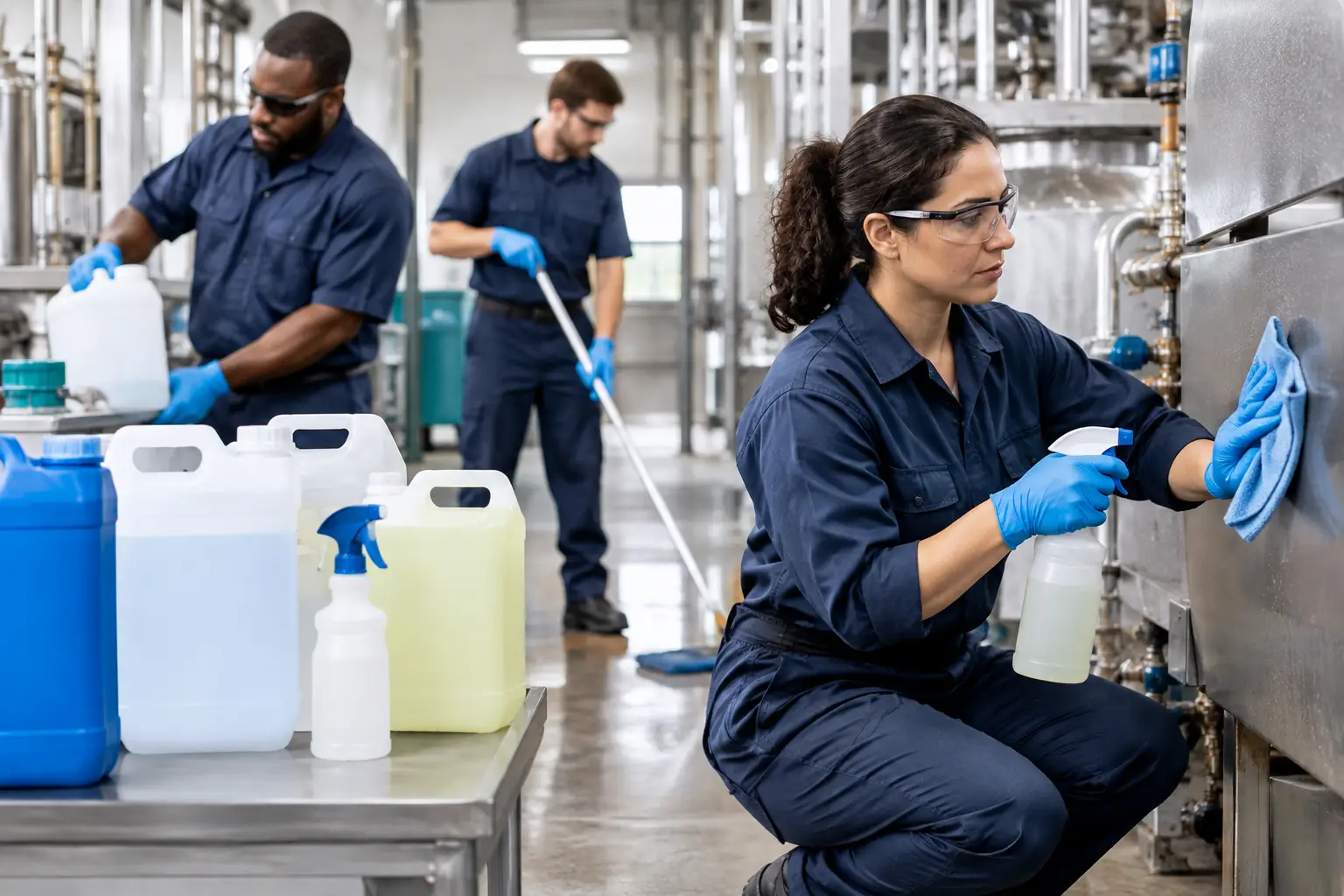
Safety Data Sheets should be readily available where products are stored and used. Supervisors should confirm that employees understand label directions, required personal protective equipment, first-aid guidance, spill procedures, and incompatibilities. Secondary containers must be properly labeled. These measures support hazard communication requirements and reduce avoidable errors when staff changes or cleaning is performed after hours.
Environmentally responsible chemistry can be valuable, particularly when it reduces harsh solvents, objectionable odors, or unnecessary hazards. However, environmental claims should be assessed in the context of the job. A safer formulation still needs to remove the target soil at the required dilution and within the available labor window. Procurement teams should request technical specifications and applicable certifications rather than relying on broad marketing language.
Documentation Is Part of the Product Decision
For government, military, healthcare, aviation, and large commercial accounts, cleaning chemistry is rarely purchased on performance claims alone. Buyers may need documentation for internal approvals, contractor onboarding, safety programs, environmental review, and audit readiness.
A dependable supplier should be prepared to provide current SDS sheets, technical data, dilution guidance, recommended applications, and relevant regulatory or certification information. Facility teams should also verify packaging formats, storage requirements, shelf-life guidance, and whether the product fits existing dispensers or equipment.
Documentation is particularly useful when multiple departments share responsibility. Operations may focus on cleaning speed, environmental health and safety may review exposure controls, and procurement may require vendor and specification records. Clear product information gives each stakeholder a common basis for approval and helps prevent substitutions that change the cleaning outcome.
Build Degreasing Into a Repeatable Program
The most effective degreasing process is not a reaction to visible buildup. It is a scheduled, documented part of facility maintenance. Frequency should reflect the soil load, traffic patterns, equipment operations, and risk level of each zone.
A machine shop may need daily attention around active equipment and scheduled deep cleaning in less accessible areas. A warehouse may focus on dock zones, battery charging areas, and forklift paths. In a healthcare or government setting, maintenance areas should be separated from public and patient-facing spaces, with clear procedures to prevent cross-contamination from tools, footwear, or cleaning equipment.
Set practical standards for what clean looks like. That may include no visible oil sheen, no residue under equipment edges, dry and slip-resistant walking surfaces, and properly labeled chemicals returned to storage. Supervisory inspections can identify recurring failures, such as inadequate rinsing, incorrect dilution, or missed areas near drains and thresholds.
Training should be direct and task-specific. Teams need to know which degreaser applies to each area, how long it must remain wet, whether agitation is necessary, and when rinsing is required. They should also know when to stop and escalate a condition, such as an uncontrolled oil leak, damaged floor coating, or a spill approaching a drain.
Common Mistakes That Undercut Results
One common mistake is applying degreaser and wiping it off immediately. Most formulas need contact time to penetrate and release soil. Another is allowing the product to dry before it can be removed, which can reduce performance or leave residue. Use only the dwell time stated in the product instructions and keep the work area controlled.
Overconcentration is another avoidable problem. More chemical does not always mean more cleaning power. It can increase cost, leave a film, create a slick surface, and make rinsing more difficult. Calibrated dilution systems and measured dispensing are operational controls, not conveniences.
Finally, do not treat drainage as an afterthought. Wash water carrying oils and cleaning chemistry may require containment or site-specific handling. Facilities should follow applicable local, state, federal, and site requirements for wastewater, storm drains, and waste materials.
Veteran Commercial Cleaning supports buyers who need industrial-grade cleaning chemistry backed by the practical information required for disciplined facility operations. The right degreasing solution should help your team remove soil with confidence while protecting people, surfaces, and the standards your facility is accountable to uphold.