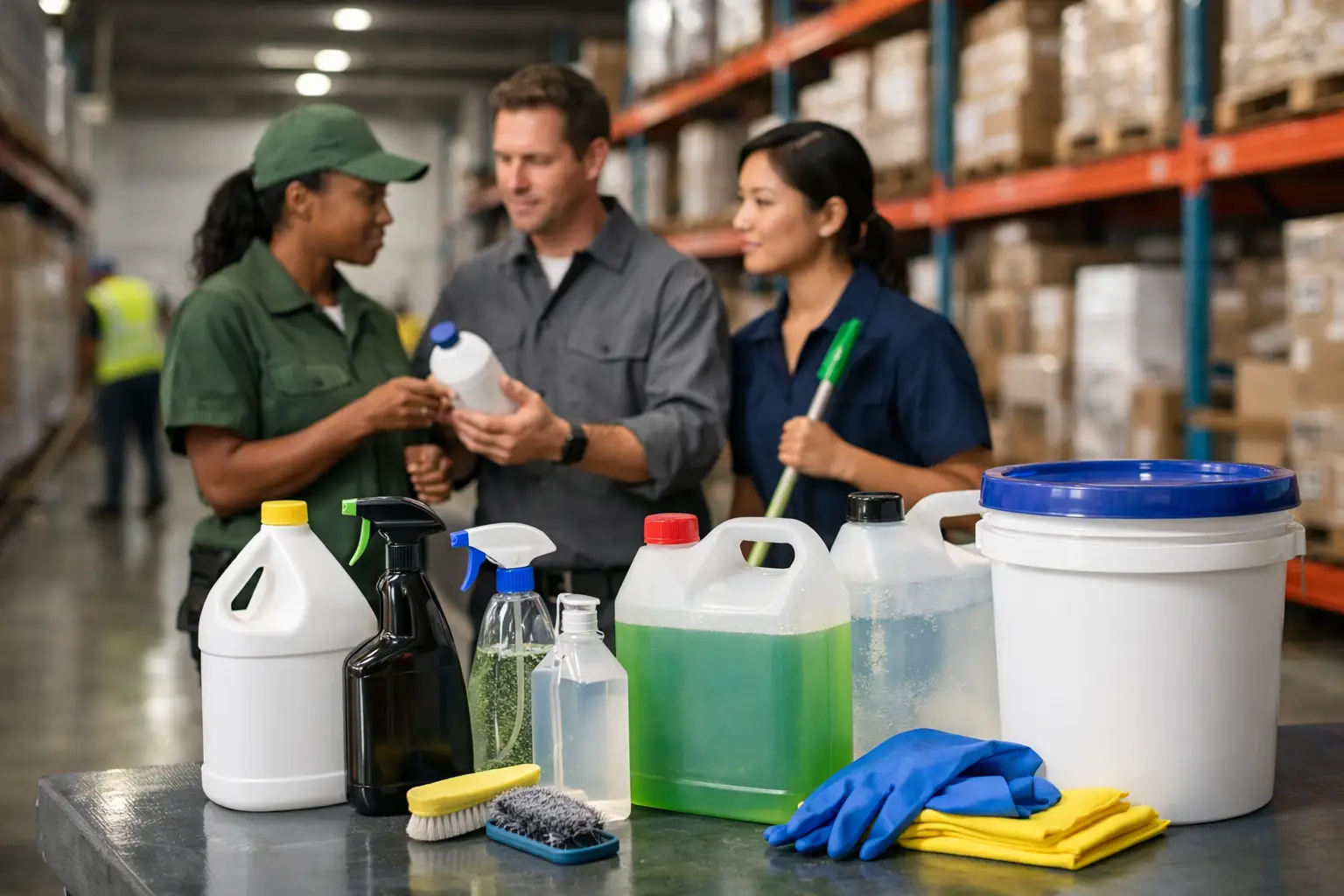
A loading dock floor slick with hydraulic oil, a breakroom sink with food residue, and a high-traffic restroom do not need the same chemistry. Effective warehouse cleaning chemical selection begins by treating each cleaning task as an operational risk decision, not a general purchasing decision. The wrong product can leave soil behind, damage a surface, create slip hazards, complicate safety training, or fail to support the documentation standards your facility requires.
Thank you for reading this post, don't forget to subscribe!For facilities managers, procurement teams, and operations leaders, the objective is straightforward: use the least hazardous chemistry that can reliably achieve the required cleaning or sanitation outcome. That approach supports worker safety, environmental responsibility, asset protection, and consistent facility performance.
Start Warehouse Cleaning Chemical Selection With the Soil
Cleaning chemicals should be selected for the material being removed, not simply for the room being cleaned. A warehouse may contain several soil types in a single shift, from tracked-in dirt and pallet debris to grease, adhesive residue, battery-related soils, and restroom contaminants.
Dry debris should be removed before liquid chemicals are introduced. Sweeping, dust control, or vacuuming first prevents a cleaner from becoming contaminated immediately and reduces the amount of chemical needed. Once dry soil is controlled, identify whether the remaining contamination is water-soluble, oily, mineral-based, biological, or a combination.
General-purpose cleaners are appropriate for routine light soil on many washable surfaces. Neutral cleaners are often a sound choice for finished floors and surfaces that need frequent maintenance without aggressive chemical action. For oils, lubricants, tire marks, and production-area buildup, an industrial degreaser may be necessary. The correct degreaser depends on the severity of the soil, dwell time available, rinse requirements, and the surface below it.
Do not assume that a stronger product is automatically the better product. Highly alkaline or solvent-heavy chemistry may cut through difficult buildup, but it can also affect coatings, paint, sealants, flooring, and worker exposure controls. Selecting chemistry that matches the actual soil usually produces better results with less operational disruption.
Match the Chemical to the Surface and Equipment
A chemical that performs well on sealed concrete may be unsuitable for aluminum, polished metal, painted equipment, rubber, vinyl, or floor finish. Surface compatibility is one of the most overlooked parts of warehouse cleaning chemical selection, especially in mixed-use facilities with offices, restrooms, shipping areas, storage racks, fleet equipment, and employee common areas.
Before standardizing a cleaner, review the manufacturer’s technical data and test it in a small, inconspicuous area when practical. Pay attention to dilution instructions, recommended dwell time, rinse requirements, and incompatibilities. A product that leaves residue may create a slip risk on smooth flooring or interfere with coatings and subsequent maintenance steps.
Floors Require Their Own Decision Process
Warehouse floors are high-value assets and high-risk work zones. A floor cleaner should remove the target soil without degrading the substrate or leaving a film that changes traction. Concrete, epoxy, urethane coatings, tile, and resilient flooring each have different tolerances.
For routine cleaning, a low-residue product suited to the floor type is often preferable. For heavy oil or grease, use a degreaser formulated for industrial surfaces, then ensure the rinse or recovery process removes loosened soil. If a floor is coated or sealed, confirm that the chemical will not dull, soften, or prematurely wear the finish.
The cleaning method matters as much as the chemical. An effective product used at the wrong dilution, picked up too quickly, or left on the floor without recovery can create more problems than it solves.
Avoid One-Chemical-for-Everything Programs
A single product may simplify storage and training, but it can create performance gaps. Warehouses generally benefit from a controlled, limited chemical program rather than an overextended one-product program. That may include a neutral cleaner for routine surfaces, a degreaser for industrial soil, a restroom cleaner, and an appropriate disinfectant or sanitizer for defined high-touch or food-related applications.
The goal is not to stock a crowded chemical closet. It is to give staff a clear, approved option for each recurring task.
Separate Cleaning, Sanitizing, and Disinfecting
These terms are often used interchangeably, but they describe different outcomes. Cleaning removes visible soil and many contaminants from surfaces. Sanitizing reduces certain bacteria to levels considered safer under the product’s labeled use. Disinfecting addresses specified microorganisms and must be performed exactly according to the product label.
In most warehouse areas, routine cleaning is the foundation. Disinfection may be appropriate in restrooms, breakrooms, first-aid areas, shared touchpoints, and other locations identified by facility policy or risk assessment. It should not be treated as a substitute for cleaning. Soil can prevent a disinfectant from reaching the surface effectively.
When evaluating disinfectants, verify the intended use, required contact time, surface restrictions, dilution instructions, and applicable regulatory documentation. A product can only support its labeled claims when it is used according to its directions. Spraying and immediately wiping a surface dry may not meet the required contact time.
Build Safety and Compliance Into the Purchase Decision
Chemical performance is only one part of a defensible procurement decision. High-compliance facilities need documentation that supports safe storage, staff training, incident response, and internal purchasing controls.
For every approved chemical, maintain current Safety Data Sheets, technical data, label information, and any certifications or regulatory records relevant to the facility’s use case. This documentation should be accessible to supervisors and employees who handle the products. It also helps procurement teams verify that substitutions do not introduce unapproved chemistry into the facility.
Consider these operational questions before adding a product to the approved list:
- Can the product be safely stored with the facility’s existing chemical inventory?
- Does the label clearly support the task and surface involved?
- What personal protective equipment, ventilation, dilution equipment, or training does it require?
- Is a rinse required in areas where residues could affect workers, equipment, or materials?
- Can the product’s packaging, labeling, and documentation support audits and recurring reorders?
Chemical compatibility deserves particular attention. Never mix cleaning chemicals unless the manufacturer explicitly directs it. Incompatible products can generate hazardous vapors, excessive heat, or other dangerous reactions. A disciplined labeling and storage program is essential in warehouses where multiple shifts, contractors, or temporary workers may access supply areas.
Consider Environmental Responsibility Without Lowering Standards
Environmentally responsible chemistry is not a lesser-performance category. The right formulation can reduce unnecessary harshness while still meeting demanding cleaning requirements. For warehouses, that often means looking for products designed to perform at effective dilutions, reduce harsh fumes, minimize problematic residues, and support safer day-to-day handling.
The trade-off is that a more responsible formulation still has to fit the soil load and operating conditions. A low-odor product may be beneficial in an occupied facility, but it must still remove the grease, grime, or residue present. Likewise, a concentrated product can reduce packaging and freight volume, but only if staff have reliable dilution controls and training.
Evaluate environmental attributes alongside performance data, worker safety requirements, and surface compatibility. Procurement decisions should be based on verified specifications, not broad marketing language.
Standardize Use Procedures, Not Just Products
Even a well-selected chemical program will fail if use procedures vary by employee or shift. Standard operating procedures should state what product is used, where it is used, how it is diluted, how long it remains on the surface, what protective equipment is required, and whether rinsing or recovery is necessary.
Color-coded bottles, secondary-container labels, dilution-control systems, and concise task instructions can reduce errors. Supervisors should also monitor whether crews are overusing chemicals. More product does not necessarily mean cleaner surfaces. Overapplication can waste inventory, leave residue, and increase exposure risks.
Veteran Commercial Cleaning supports institutional buyers with professional-grade cleaning chemistry and the documentation-focused approach needed for controlled facility programs. For procurement teams, a reliable supplier relationship is valuable when it delivers consistent product specifications, clear safety information, and solutions aligned with operational requirements.
Review Results and Adjust for Changing Conditions
Warehouses change. A new tenant, production line, fleet maintenance activity, floor coating, food-handling area, or seasonal weather pattern can change the soils your team must manage. Review the chemical program after operational changes, recurring cleaning failures, safety incidents, or employee feedback.
Track practical indicators such as re-clean rates, floor appearance, slip incidents, chemical consumption, odor complaints, surface damage, and staff adherence to procedures. These measures reveal whether the issue is chemistry, equipment, training, or process design.
A disciplined chemical program gives a warehouse more than clean floors and stocked restrooms. It gives the operation a repeatable standard for protecting people, preserving facility assets, and meeting the expectations attached to a professional workplace. Start with the soil, verify the surface and documentation, then make each product earn its place in the program.