A warehouse drain can look clean from the floor while holding odor-producing residue, biofilm, and contaminated debris below the grate. That gap matters. When teams sanitize warehouse drains only after an odor complaint or a failed inspection, they are responding to a problem that has already reached the work area.
Thank you for reading this post, don't forget to subscribe!A disciplined drain sanitation process protects employees, supports housekeeping standards, and helps prevent dirty water, pests, and chemical residue from becoming an operational issue. The right method depends on what enters the drain, the drain material, nearby processes, and the facility’s wastewater requirements. It is not simply a matter of pouring disinfectant into an opening.
Why warehouse drains require a controlled process
Floor drains collect what the rest of the operation sheds: tracked-in soil, packaging debris, dust, oils, organic matter, wash water, and residue from cleaning activities. In manufacturing or maintenance areas, they may also receive lubricants and process soils. In shipping areas, water from weather and equipment cleaning can carry sediment that settles below the surface.
That material creates a favorable environment for buildup. Biofilm can develop on wet interior surfaces, protecting microorganisms from a quick surface treatment. Meanwhile, dry or damaged drain traps can allow sewer gas and odors into the facility. A drain that backs up may turn routine foot traffic or equipment movement into a slip, splash, or contamination event.
Drain cleaning and drain sanitizing have different jobs. Cleaning removes the physical soil that blocks a sanitizer from contacting the surface. Sanitizing or disinfecting, when appropriate for the area and product label, addresses microorganisms after that soil is removed. Skipping the cleaning stage often wastes chemical and produces inconsistent results.
How to sanitize warehouse drains without creating new risks
The most effective procedure is repeatable, documented, and aligned with the facility’s safety program. Frequency should be based on conditions, not guesswork. A high-traffic loading area, a food-adjacent operation, and a dry-storage warehouse may need very different schedules.
1. Inspect the drain and control the work area
Start by looking for standing water, slow flow, loose grates, visible residue, pest activity, unusual odors, and evidence of backflow. Identify whether the drain serves a sanitary sewer, stormwater system, oil-water separator, or another controlled discharge path. This distinction is critical because chemicals and soils permitted for one system may be prohibited in another.
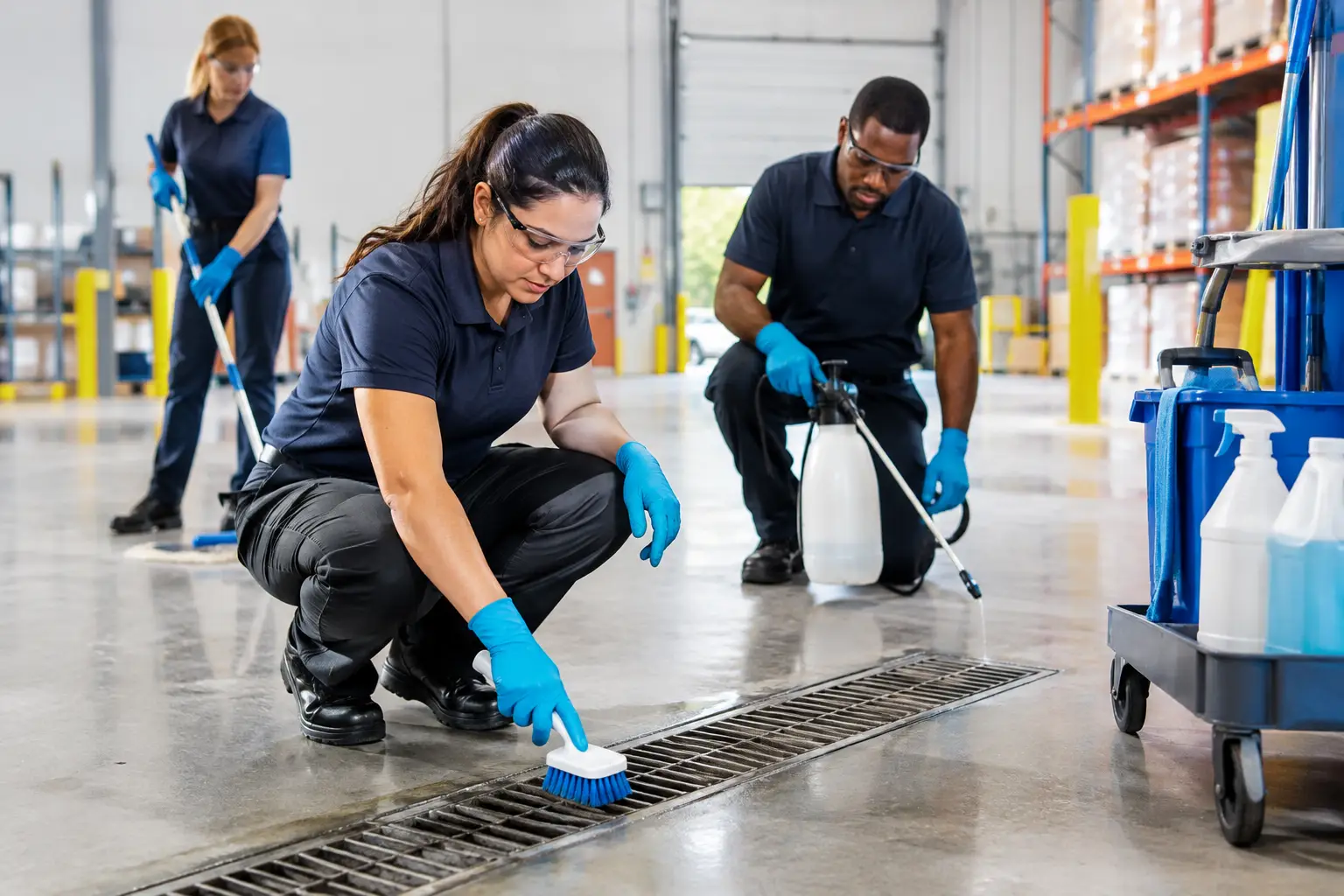
Set up the work area before removing the grate. Use appropriate signage or barriers where employees, forklifts, carts, or visitors could pass through. Personnel should wear task-appropriate personal protective equipment, which may include gloves, eye protection, and footwear with suitable slip resistance. If the drain has unusual vapors, a deep pit, or restricted access, follow the site’s hazard assessment and confined-space procedures rather than treating it as a routine cleaning task.
2. Remove debris before applying chemistry
Lift the grate carefully and remove solid debris with dedicated tools. Do not force rags, stretch wrap, labels, or heavy sediment farther into the line. That approach can create a blockage beyond the point where the cleaning team can safely correct it.
Collect debris for disposal according to facility procedures. Then use the appropriate drain brush, scraper, or other mechanical method to loosen buildup from the grate, basket, drain bowl, and accessible interior surfaces. The goal is to expose the surface beneath the soil, especially around the waterline where biofilm commonly develops.
If grease, oil, or industrial residue is present, use a cleaning chemistry designed for that soil type and compatible with the drain materials. More aggressive chemistry is not automatically better. Some formulations can damage metals, coatings, seals, or nearby concrete, while others may create wastewater compliance concerns. Follow the product label, SDS, dilution instructions, and site discharge requirements every time.
3. Rinse and verify drainage before sanitation
After cleaning, rinse in a controlled manner if the product directions and facility rules permit it. Confirm that water moves freely and that the drain trap retains water where applicable. A dry trap can be the source of recurring odor even after the visible surfaces have been cleaned.
Slow drainage is a maintenance finding, not a reason to add more sanitizer. Escalate recurring backups, damaged grates, broken trap primers, cracks, or evidence of line failure to the appropriate maintenance contact. Cleaning crews should not be expected to compensate for a mechanical problem with repeated chemical application.
4. Apply the correct sanitizer or disinfectant
Choose a product based on the intended claim, the facility’s exposure risks, surface compatibility, and regulatory requirements. A product labeled for sanitizing is not automatically a disinfectant, and a disinfectant does not perform as intended if it is diluted incorrectly, applied to a dirty surface, or wiped away before its required contact time.
Apply the solution to accessible drain components and interior surfaces according to label directions. Ensure adequate coverage without creating overspray, pooling, or runoff into areas where it does not belong. Do not mix cleaning chemicals. Mixing incompatible products can release hazardous gases, reduce performance, or create preventable injury risks.
Contact time is a control point that deserves attention. Teams often apply a chemical, see foam or fragrance, and immediately rinse. That is not a verified sanitation process. The product label establishes the required dilution, application method, and dwell time. Supervisors should build those directions into the work instruction rather than relying on memory.
5. Reassemble, document, and return the area to service
Replace and secure the grate, remove barriers only after the walking surface is safe, and inspect the surrounding floor for slick residue. A drain sanitation task should leave the area safer than it was before the work began.
Record the date, location, condition observed, cleaning method, product used, dilution when relevant, and any maintenance issue identified. In regulated facilities, this record supports sanitation verification and makes recurring conditions easier to identify. It also gives operations leaders useful evidence when they need to adjust cleaning frequency, address drainage design, or justify a repair.
Match the frequency to the warehouse environment
Weekly service may be reasonable for a low-soil warehouse with limited wet activity. It may be inadequate for facilities with frequent equipment washdown, high pedestrian traffic, exterior loading exposure, food handling proximity, or processes that generate oils and organic residue. The right interval comes from inspection results and risk, not a generic calendar.
A practical approach is to establish a baseline schedule, then inspect high-risk drains between scheduled services. If odors return quickly, water drains slowly, or residue is repeatedly visible, investigate the source. Frequent re-treatment without source control increases labor and chemical use while leaving the underlying condition unresolved.
Seasonal conditions can also change requirements. Rain, snow, deicing materials, and increased loading activity can introduce more sediment and water into warehouse entry points. Facilities should review drain practices before predictable weather shifts instead of waiting for an overflow or complaint.
Chemical safety and wastewater compliance are connected
Drain sanitation affects more than the immediate floor area. Chemical selection must account for worker safety, surface compatibility, and what the facility is authorized to discharge. Product labels and Safety Data Sheets should be accessible to the people performing the work, while technical specifications should be available for environmental health and safety, procurement, and compliance review.
Never assume a sanitizer can be used in a storm drain, exterior catch basin, or separator system. Local wastewater rules, facility permits, and environmental procedures may set specific limits. The same caution applies to concentrated degreasers and odor-control products. Use only chemistry approved for the application and follow the stated dilution and disposal directions.
For high-compliance sites, standardizing approved chemistry and written work instructions reduces variation across shifts and contractors. Veteran Commercial Cleaning supports this disciplined approach by emphasizing institutional-grade cleaning solutions, documentation, and safer chemistry choices suited to demanding facility environments.
Train for consistent execution
A drain procedure is only as reliable as the people and controls behind it. Train staff to distinguish routine soil from a maintenance concern, understand product contact time, recognize incompatible chemicals, and document findings clearly. Supervisory spot checks should focus on whether physical debris was removed, whether the right chemistry was used correctly, and whether the work area was returned to safe condition.
The strongest warehouse sanitation programs treat drains as part of the facility’s preventive maintenance system, not as hidden infrastructure. When cleaning, chemical control, drainage maintenance, and documentation work together, a floor drain becomes one less source of disruption in a facility that cannot afford operational surprises.